
Your toddler is wide awake at 8:15, negotiating for one more book, and you've read the same three titles so many times you could recite them in your sleep. Then you remember something a friend mentioned: try a story with my child's name in it, the kind where they're the hero of the adventure instead of just watching it happen to some unnamed kid on the page. It sounds like a small trick. It isn't quite that small.
Long before children can read, they already respond differently to their own name. In a well-known study, four-and-a-half-month-old infants listened noticeably longer to a recording of their own name than to other names with a similar sound pattern (Mandel, Jusczyk, & Pisoni, 1995). That preference doesn't disappear as kids grow up. It's part of why a story with your child's name in it can hold their attention on nights when nothing else does.
This guide covers why personalized stories work, how to build one tonight without any special tools, what to look for in an app if you'd rather not write it yourself, and where this kind of story fits into an already tiring bedtime routine.
What Makes a Story With My Child's Name Different
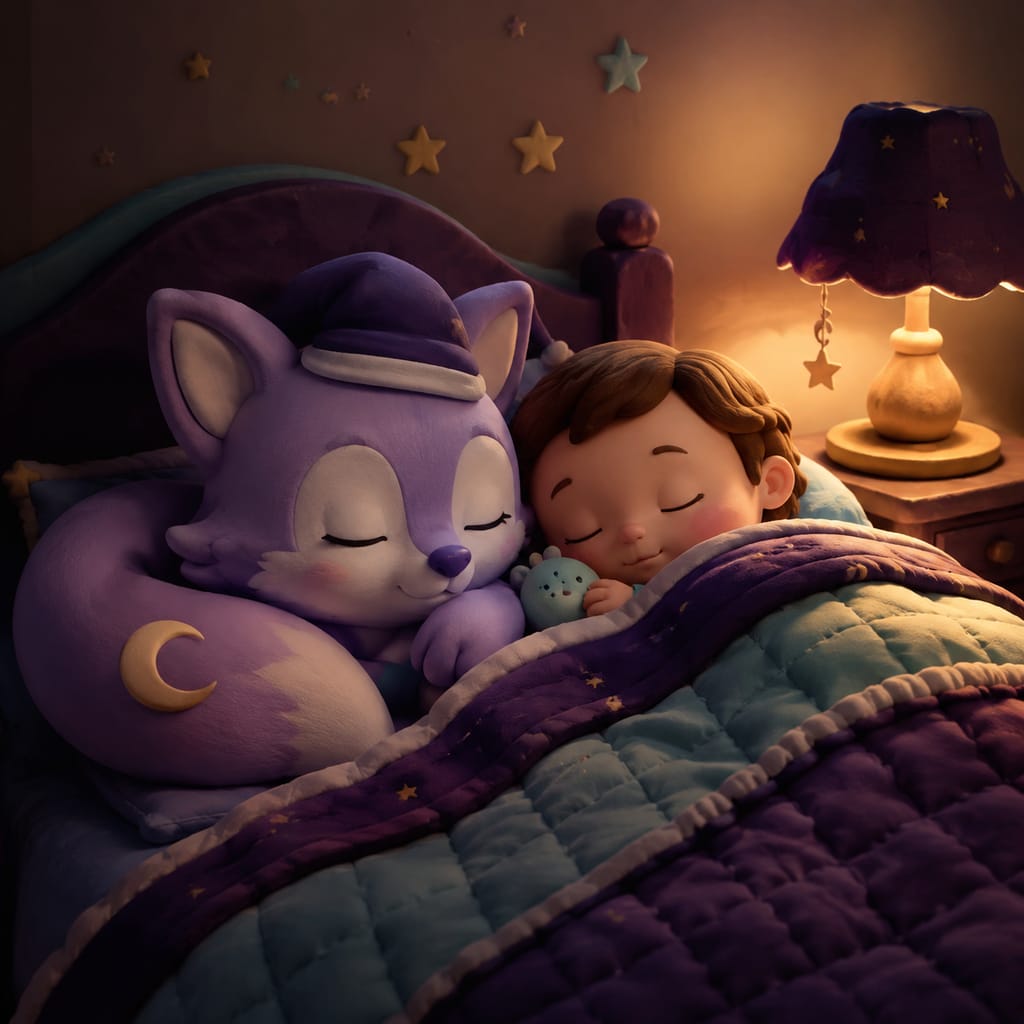
A story with my child's name in it isn't a gimmick so much as a shortcut to attention. Most bedtime books feature a child your kid has never met, having an adventure your kid is only watching. Swap that unnamed character for your child, using their real name, and the story shifts from something they observe to something that happens to them.
This matters most on hard nights. A three-year-old who's had a long day, skipped a nap, or is simply not in the mood for another book often perks up the moment they hear their own name spoken aloud. It doesn't fix every bedtime struggle, but it buys you something valuable: a few extra minutes of genuine attention when you need it most.
The effect tends to work best when the story keeps a familiar shape. Kids don't need a new plot every night. They need themselves inside a plot they already trust.
The Science Behind Why Kids Lean Into Personalized Stories
The pull of hearing your own name has a name in psychology: the self-reference effect. Decades of research on adults has shown that information connected to the self gets processed more deeply and remembered better than information about someone else (Rogers, Kuiper, & Kirker, 1977). Children aren't miniature adults, and researchers are careful about how far this effect generalizes to young kids, but the underlying pattern, that we pay closer attention to things tied to us, shows up early and consistently, starting with that same-name preference in infancy (Mandel, Jusczyk, & Pisoni, 1995).
There's a second piece worth knowing: engagement with a story, not just the words in it, is closely tied to literacy and language growth over time. A large meta-analysis of joint book reading found consistent links between shared reading and stronger later reading skills, and engagement, not just exposure, was part of what made the difference (Bus, Van IJzendoorn, & Pellegrini, 1995). A story your child leans into, because they're the hero of it, is a story they're more likely to actually listen to from start to finish.
None of this means a personalized story is magic. It means it has a real, well-documented mechanism behind it: attention follows the self, and attention is most of what a tired parent is fighting for at 7:45 PM.
How to Build a Bedtime Story With My Child's Name Tonight
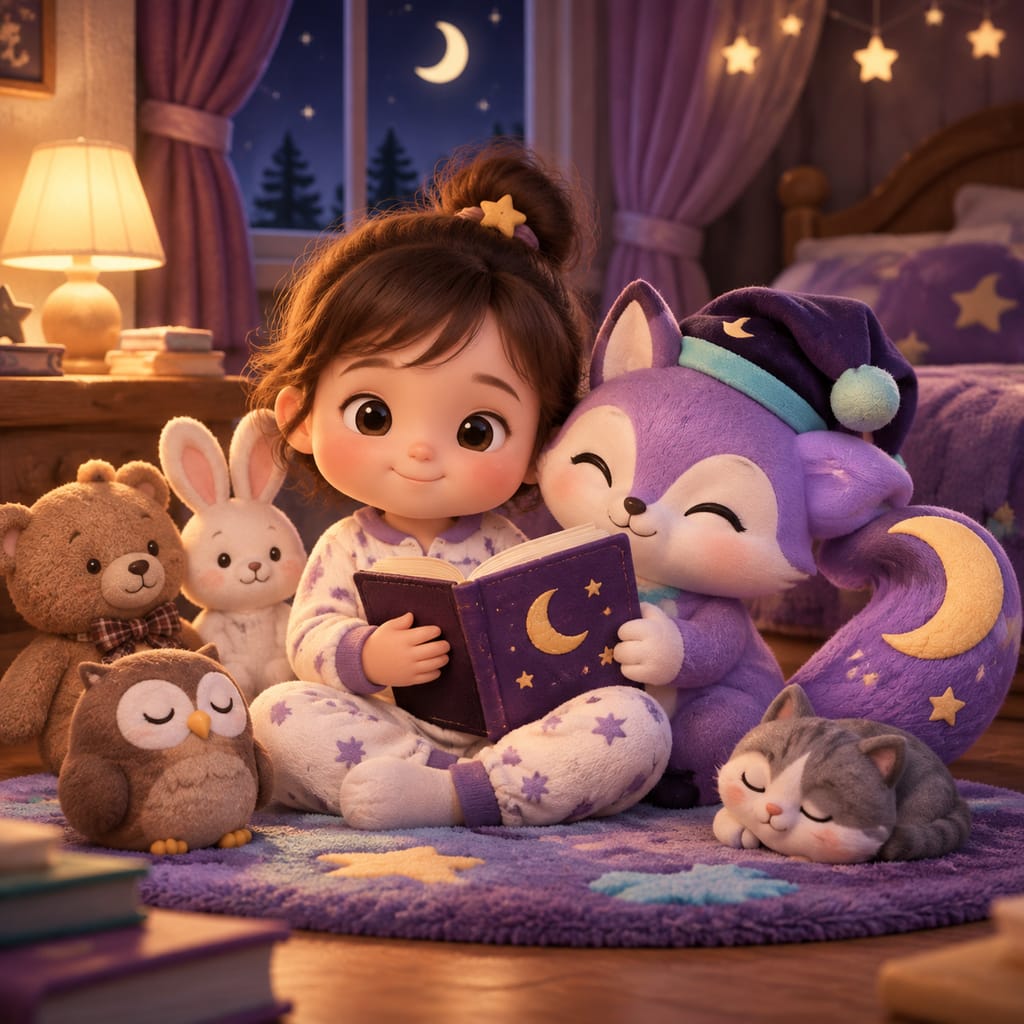
You don't need any tools to try this. A story with your child's name works whether you write it down, type it into an app, or make it up on the spot while they're brushing their teeth.
- Start with a shape you already know. A walk through the woods, a visit to a gentle animal friend, a small problem solved by bedtime. Familiar structures are easier to keep calm and predictable.
- Make your child the main character by name. Not "a little boy went for a walk," but "Maya went for a walk." Say their name a few times through the story, not just once at the start.
- Add one or two real details. Their actual stuffed animal, a sibling's name, their favorite color. Small, true details make the story feel like theirs, not a template with a name dropped in.
- Keep the pacing slow and the stakes low. Bedtime is not the place for cliffhangers. The character should feel safe, cozy, and a little sleepy by the end.
- End the same way most nights. A predictable close, like the character settling into bed under a soft blanket, signals to your child's body that it's time to wind down too, which lines up with what researchers know about the value of a consistent nightly routine (Mindell & Williamson, 2018).
If you want a starting structure that already has that predictable shape built in, our bedtime routine for toddlers guide walks through a repeatable nightly sequence you can slot a personalized story into.
Where a Personalized Story Fits Into the Wind-Down Routine
A story with your child's name works best as part of the routine, not as a replacement for it. Kids settle better when bedtime follows the same steps in the same order most nights, and a personalized story simply becomes one of those steps, usually right before lights out.
If you're not sure whether to read it aloud yourself or use an audio version, both have real support. A calm, screen-free voice narrating a story, whether it's you or a recording, tends to work about as well for winding a child down as reading a physical book, as long as the tone stays gentle and the pacing stays unhurried. We cover this in more depth in audio stories vs reading to kids, including when one option makes more sense than the other for your family.
Want a screen-free way to try personalization tonight? Our free audio bedtime stories give kids a calm, narrated story to settle into, without a screen glowing in their face right before sleep.
Apps and Tools That Add Your Child's Name Automatically
If writing your own story every night isn't realistic, which is fair, most parents are exhausted by 7 PM, a personalized story app can do the heavy lifting. These tools typically let you type in your child's name, sometimes an age or a favorite animal or interest, and generate a short story built around them in a minute or two.
The better ones share a few traits: the story stays age-appropriate and calm rather than exciting or suspenseful, the narration (if included) is slow and soothing rather than upbeat, and you can preview or edit the story before your child hears it. Some use AI to generate the story text itself, which raises its own questions about quality and safety, covered in our guide to AI bedtime stories for kids.
If you're comparing options, our breakdown of the best bedtime story apps walks through what separates a genuinely useful app from one that's mostly noise, including which ones offer real personalization versus a name slapped onto a fixed template.
What to Watch For With Personalized Story Apps
Not every personalized story app is built with the same care, and a few things are worth checking before you hand one your child's name.
- Privacy policy. Your child's name and any details you enter should be handled with a clear, readable privacy policy. If you can't find one, that's a red flag.
- Content guardrails. A story generated on the fly can occasionally wander somewhere odd. Look for apps that review or constrain generated content so nothing scary or confusing slips through at 8 PM.
- No ads at bedtime. An ad interrupting a wind-down story defeats the purpose. Ad-free is worth paying for if the free version isn't.
- Screen-optional. Audio-first apps let your child close their eyes and listen, rather than staring at a lit screen right before sleep, which most sleep guidance for young kids recommends limiting close to bedtime.
None of this means you need to avoid apps entirely. It means treating a story-generating app the way you'd treat any other product marketed to parents of young kids: worth a few minutes of checking before it becomes a nightly habit.
When a Generic Story Works Just as Well
It's worth saying plainly: a story with your child's name isn't a requirement for good sleep, and plenty of kids do perfectly well with the same worn-out picture book they've asked for eighty nights running. Familiarity itself is calming, and a child who already loves a particular story doesn't need it swapped out for a personalized version to get the benefit of a good bedtime routine.
Personalization tends to help most in specific moments: a resistant bedtime, a child who's bored of the current rotation, or a kid who's anxious about something and might respond well to seeing themselves handle it bravely inside a story. For that last case, our guide to bedtime stories for anxious kids has more on using story as a gentle rehearsal for real worries.
If your child is happy with their current books, there's no need to fix what isn't broken. Save the personalized story for the nights you actually need an edge.
Common Questions from Parents
Can I make a personalized story without any app at all?
Yes, and many parents do exactly this for years before ever trying an app. A story with your child's name only needs a familiar shape, your child as the main character, and a calm, predictable ending. It takes practice to feel natural making one up on the spot, but even a clumsy first attempt usually lands better with your child than a polished story about someone else.
Does this work for older kids too, or mostly toddlers?
Personalization isn't just a toddler thing. Preschoolers and early elementary kids often enjoy it even more, since they can follow a slightly longer plot and appreciate small inside jokes or real details woven into the story. Older kids sometimes want to help write it themselves, which shifts the activity from "story for them" to "story with them," and that collaboration can be just as calming as a passive listen.
What if my child has a name an app struggles to pronounce?
This is a real limitation of some automated tools, especially ones that generate audio narration. If an app consistently mispronounces your child's name, it's worth checking whether it offers a phonetic spelling option or a manual audio recording feature. Otherwise, writing or reading the story yourself sidesteps the problem entirely, since you already know exactly how to say it.