

It's 5:40 p.m., and your toddler was just picked up from daycare, wheeled through a grocery store under fluorescent lights, and cooed at by a stranger in the checkout line. By the time you buckle her into the car seat, she's screaming, arching her back, and impossible to console. You didn't do anything wrong. Her brain simply ran out of room to process the day. This guide covers how to calm an overstimulated toddler in the moment, the early warning signs to watch for, and how to build a routine that prevents meltdowns before they start.

What Overstimulation Actually Means in a Toddler's Brain
A toddler's brain is still building the wiring it needs to filter and manage input. The regions responsible for self-regulation, planning, and calming down after stress develop gradually across early childhood, shaped heavily by the environment and the caregiving a child receives (Shonkoff & Phillips, 2000). A toddler isn't being dramatic when a birthday party or a loud family dinner sends them over the edge. Their brain is doing exactly what an immature nervous system does when it's asked to process more sound, light, movement, and social interaction than it can handle at once.
Stress researchers describe this as the body's response system getting activated faster and staying activated longer in young children than in adults, since the systems that regulate cortisol and calm the body back down are still maturing (Gunnar & Quevedo, 2007). That's why a toddler can go from fine to sobbing in under a minute, and why coming back down often takes real time, not just a firm word or a distraction.
The Early Signs of an Overstimulated Toddler
Overstimulation rarely appears out of nowhere. There's almost always a build-up phase, and catching it early makes everything easier.
- Covering ears or eyes, even in a room that doesn't seem that loud or bright to you.
- Sudden clumsiness, bumping into furniture or people more than usual.
- Getting silly and wild instead of quiet, laughing too hard, running in circles, or crashing into cushions.
- Zoning out, staring blankly or going quiet in a way that seems unlike them.
- Small frustrations landing hard, like a shoe not fitting right triggering tears that seem out of proportion.
- Clinginess, wanting to be held constantly or refusing to be put down.
Noticing two or three of these signs together is often the window to step in, before a full meltdown starts.
How to Calm an Overstimulated Toddler in the Moment
Once overstimulation hits its peak, the goal isn't to explain, negotiate, or reason. It's to lower input and let the nervous system reset.
- Move to a quieter space. Even stepping into a hallway, a car, or a bathroom cuts down on sound and visual clutter fast.
- Get low and calm your own body first. Toddlers pick up on a parent's tone and tension. A slower voice and relaxed shoulders send a signal that the moment is safe, even before words register.
- Offer touch if your toddler wants it. A firm hug, a hand on the back, or being held tightly can help some toddlers settle, though others need space instead. Follow their lead.
- Skip the questions and explanations. "What's wrong?" or "Use your words" asks an overwhelmed brain to do more processing, which is the opposite of what it needs right now.
- Let the crying run its course. Trying to shush a toddler out of crying too fast can extend the reaction. A calm, present parent who isn't rushing the moment usually helps it pass faster.
- Wait before re-engaging. Give it 10 to 20 minutes of quiet before offering a snack, a toy, or a conversation. Jumping back into stimulation too soon can restart the cycle.
If anger seems to be the main emotion showing up alongside the overwhelm, our guide on helping your child manage anger has more specific tools for that piece of it.
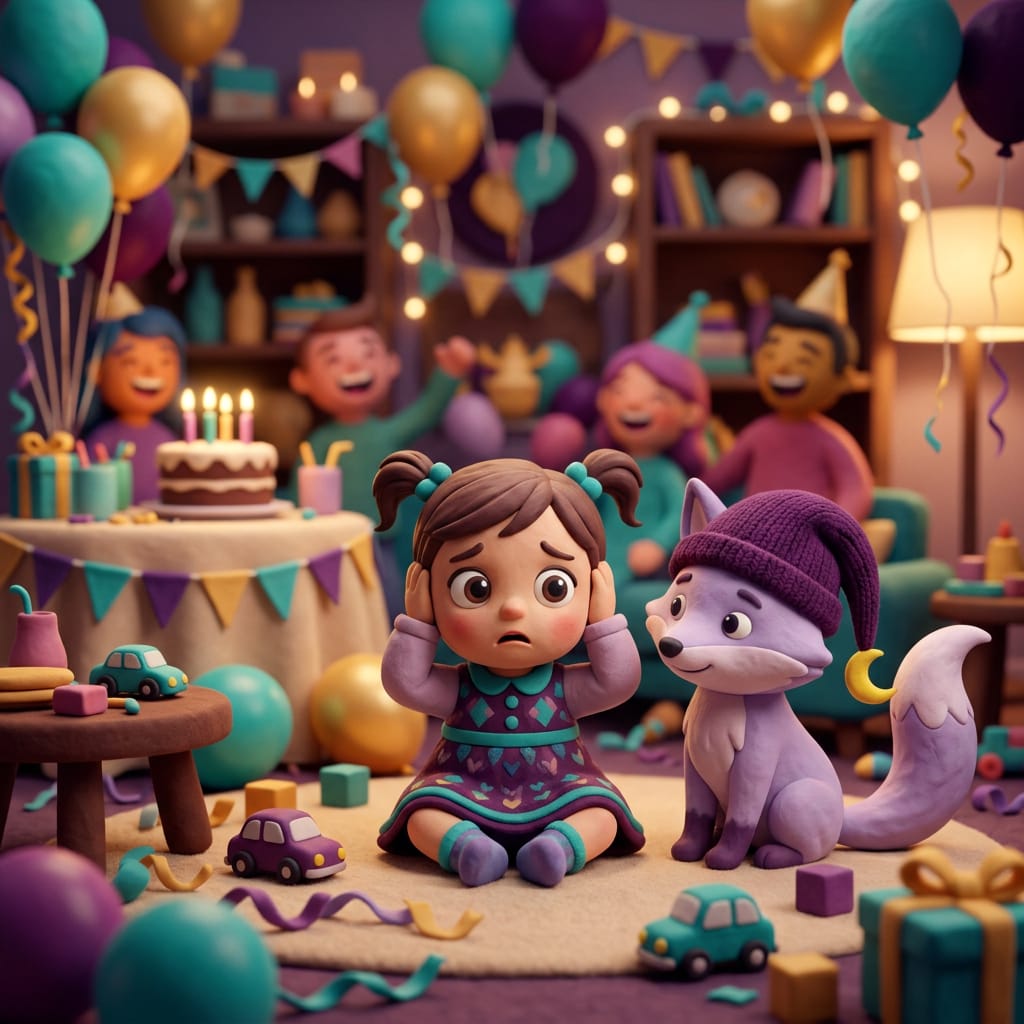
Lowering the Stimulation at Home Before It Builds Up
Some homes are naturally louder and busier than others, and that's fine. A few adjustments can still make a real difference in how often overstimulation shows up.
- Build in quiet stretches between activities. Back-to-back errands, playdates, and outings leave no recovery time. Even 20 minutes of unstructured play between events helps.
- Turn down background noise. A TV playing in the background, even unwatched, adds to the total sensory load a toddler is processing all day.
- Create one low-stimulation corner. A small reading nook with soft lighting, pillows, and a couple of familiar toys gives your toddler somewhere to retreat when things feel like too much.
- Watch the transitions, not just the events. Overstimulation often builds during shifts, leaving daycare, walking into a store, coming home from a party, more than during the activity itself. Slow those moments down when you can.
- Notice your toddler's personal threshold. Some toddlers handle noise and crowds easily and struggle with new textures or smells instead. Pay attention to which specific inputs tend to tip yours over.
A calm, screen-free wind-down helps more than it seems. A quiet Dreamloo audio story gives your toddler something soothing to focus on without adding more visual or social input to an already full day.
A Wind-Down Routine That Prevents Overstimulation at Bedtime
Bedtime is often where a day of accumulated stimulation finally catches up with a toddler, which is part of why evenings can feel harder than the rest of the day put together. A steady, low-input routine in the 30 to 45 minutes before lights-out gives the nervous system time to come down gradually instead of all at once.
- Start the same sequence every night. Bath or wash-up, pajamas, brushing teeth, then a book or a story, in that order, every time.
- Dim the lights early. Bright overhead lighting keeps the brain more alert than a lamp or nightlight does.
- Cut screens completely in this window. Fast-moving, brightly lit content is one of the most reliably overstimulating inputs for a young child, which is part of why the World Health Organization sets such a firm limit on toddler screen time (World Health Organization, 2019).
- Keep voices and energy low. Save wrestling, tickling, and loud games for earlier in the evening, not the last half hour before bed.
- End with something predictable and calm, like a familiar story, so the last thing your toddler experiences before sleep is quiet and steady, not new or exciting.
If your evenings don't have a consistent shape yet, our bedtime routine for toddlers guide walks through building one from scratch, and our list of calming activities before bed has more specific ideas for filling that wind-down window.

Mistakes That Make Overstimulation Worse
- Adding more talking, not less. A long explanation of why the reaction is "too much" asks an already overloaded brain to process even more.
- Rushing back into activity. Cutting the calm-down window short and moving straight to the next errand or task often triggers a second wave.
- Matching the intensity. Raising your own voice or moving quickly in response tends to escalate things rather than settle them.
- Treating every meltdown as defiance. A toddler who is overstimulated isn't choosing to misbehave. Responding with punishment in that moment usually adds stress on top of stress.
- Skipping the recovery time after a big day. A packed schedule of fun activities can still add up to overstimulation by evening, even when every individual event was enjoyable.
When to Talk to Your Pediatrician
Most toddler overstimulation responds well to a calmer environment and a steadier routine over a few weeks. It's worth bringing up with your pediatrician if meltdowns are frequent and intense across most days, if your toddler seems distressed by ordinary levels of noise, light, or touch that don't bother other children their age, or if the reactions seem to be getting more frequent rather than less as your toddler gets older. The American Academy of Pediatrics notes that unstructured, low-pressure play is one of the most protective tools for building a young child's capacity to self-regulate over time (Yogman et al., 2018), so a pediatrician can also help you figure out whether your toddler simply needs more of that kind of downtime built into the week.

Common Questions from Parents
My toddler seems fine at events and then falls apart later at home. Why?
This is common and often called a "delayed" reaction. Some toddlers hold it together in the moment, especially around unfamiliar people, and only let the overwhelm out once they're back in a safe, familiar space with you. It's a sign your toddler trusts home as the place it's okay to fall apart, not a sign anything went wrong at the event itself.
Does overstimulation get better as toddlers get older?
Yes, generally. As the brain regions involved in self-regulation continue developing through early childhood, most children get steadily better at managing sensory input and recovering more quickly from it (Blair & Raver, 2015). Consistent, calm responses from caregivers during the toddler years support that development rather than just waiting it out.
Should I avoid busy places altogether to prevent overstimulation?
Not necessarily. Toddlers also need exposure to the everyday world, and avoiding every busy or new environment isn't realistic or especially helpful long term. The more useful approach is pacing: build in recovery time before and after busier outings, and watch for the early signs so you can step in before a full meltdown, rather than cutting out stimulating experiences entirely.