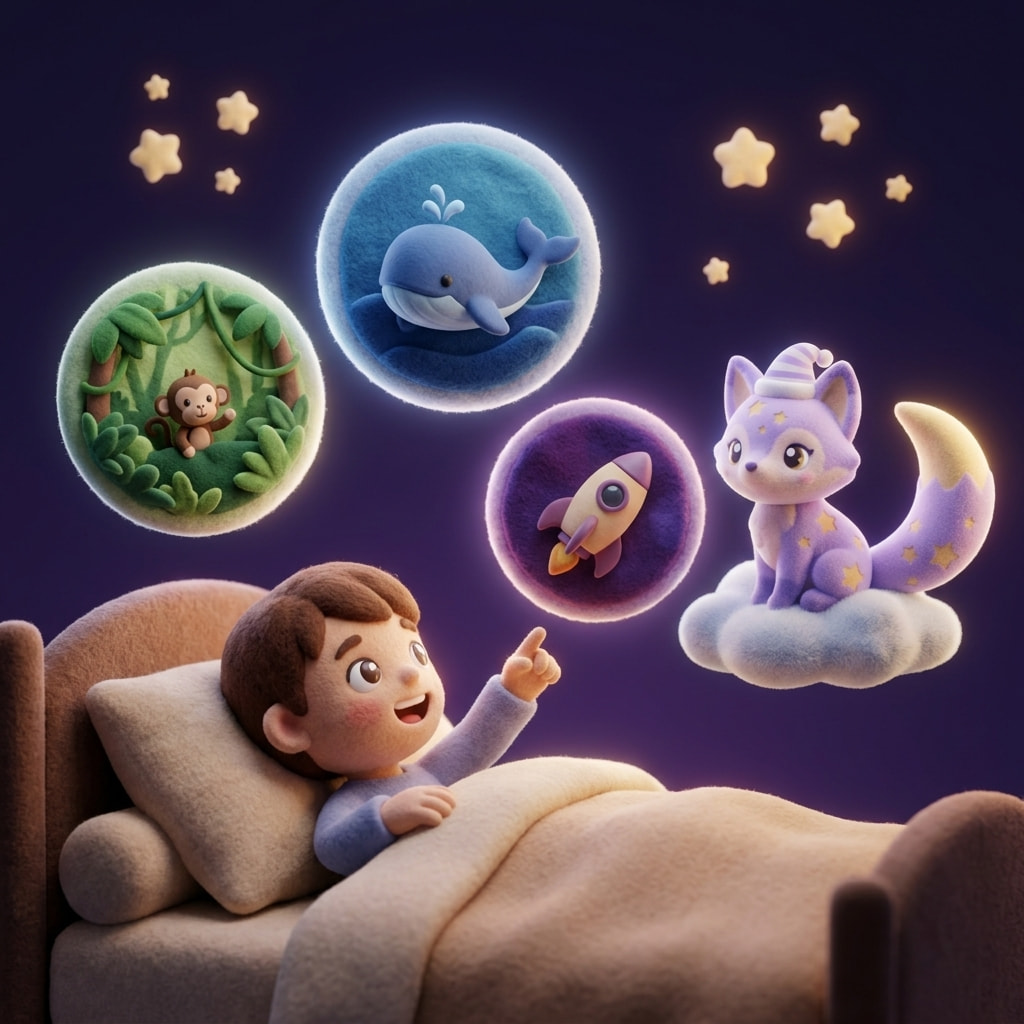

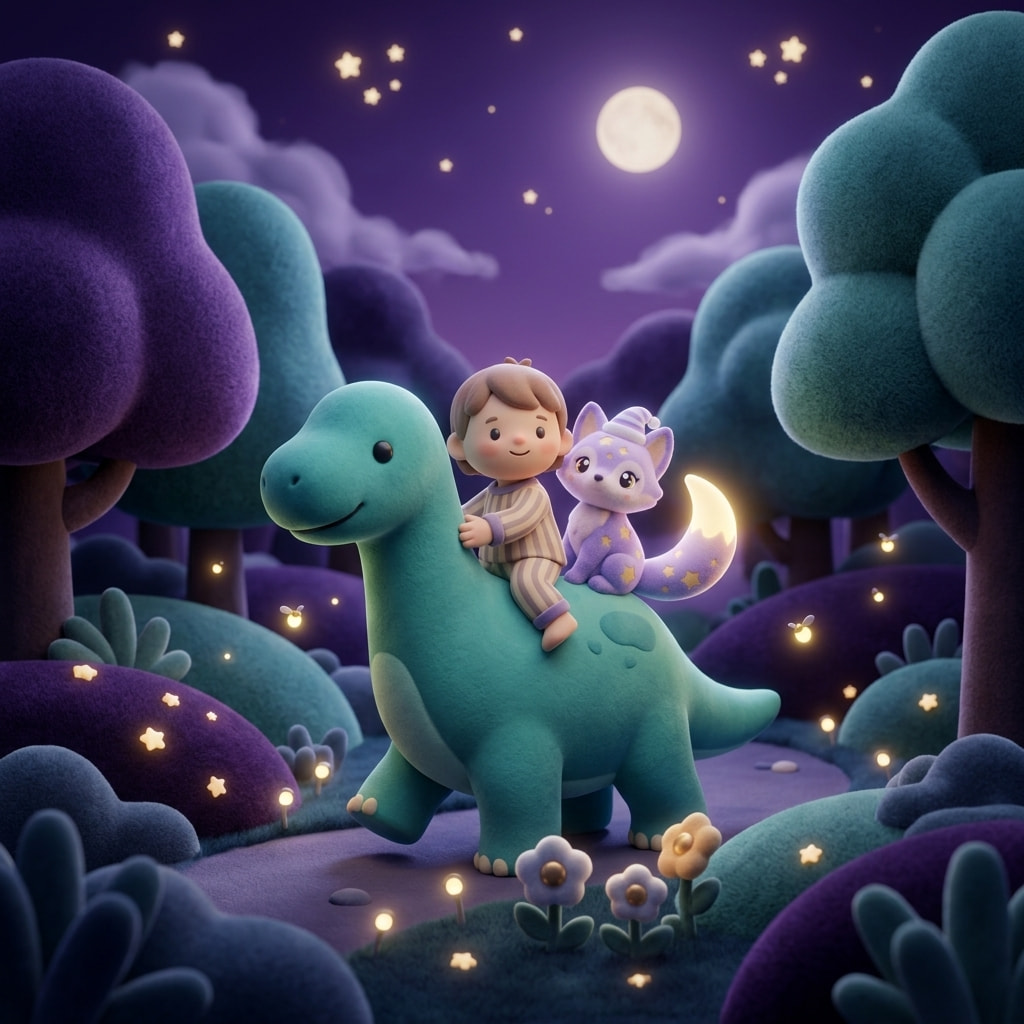
Your 4-year-old loves dinosaurs, hates brushing teeth, and is nervous about starting school next month. Tonight, instead of a generic story about a princess in a castle, imagine handing them a story where they are the hero — riding a dinosaur through a land where every creature brushes their teeth before adventures, and where the bravest explorers always find a great new school.
That is the idea behind personalized bedtime stories. And the research suggests it is more than a gimmick — it taps into a well-documented psychological principle that makes children listen harder, remember more, and connect deeper with the stories they hear.
This article explains why personalization works, what the science says, what options parents have today, and how to make personalized stories part of your child's bedtime routine.
The Science: Why Kids Engage More When They Are the Hero
There is a reason your child's eyes light up when they hear their own name in a story. Psychologists call it the self-reference effect — a robust finding in cognitive science showing that people remember information better when it is connected to themselves.
A meta-analysis by Symons and Johnson, published in Psychological Bulletin, confirmed that self-referential processing produces stronger memory encoding than almost any other encoding strategy tested. In plain terms: when your brain processes something as "about me," it pays more attention and stores it more carefully.
This effect is not just for adults. Research from Abertay University demonstrated that when children were given learning tasks framed around themselves (writing sentences starting with "I" or "owning" items during a sorting game), their performance improved by nearly 20% compared to tasks framed around other characters. The researchers concluded that self-referencing is one of the simplest and most reliable ways to increase engagement and retention in children.
When this principle is applied to bedtime stories — putting the child's name, interests, and real-life situations into the narrative — several things happen:
Attention increases. A child hearing "And then Emma walked into the enchanted forest" is paying more attention than a child hearing "And then the girl walked into the enchanted forest." The name acts as an automatic signal: this is about me.
Emotional investment deepens. When the hero shares your child's name, age, and interests, the events of the story feel personal. A challenge the character overcomes becomes a challenge your child overcomes. That emotional processing is exactly what makes stories effective at bedtime — it creates a feeling of resolution and safety.
Vocabulary acquisition improves. Research published in First Language (Kucirkova et al., 2014) found that preschoolers learned significantly more new words from personalized sections of stories compared to non-personalized sections. The personal relevance acts as a memory hook for new language.
Re-reading increases. Studies by Kucirkova, Messer, and Whitelock (2013) found that both parents and children showed higher engagement — more smiles, more verbal interaction, more spontaneous comments — when reading personalized books compared to the child's own favorite book. Children who are more engaged with a story ask to hear it again, and repetition is one of the strongest drivers of learning.
Beyond the Name: What "Personalized" Really Means
Slapping a child's name into a template is the simplest form of personalization, but it is also the weakest. Research suggests the effect is strongest when personalization goes deeper.
Levels of personalization
Level 1 — Name only. The child's name appears in the story. This is what most personalized print books offer. It works, but the effect is limited because the story itself is identical for every child.
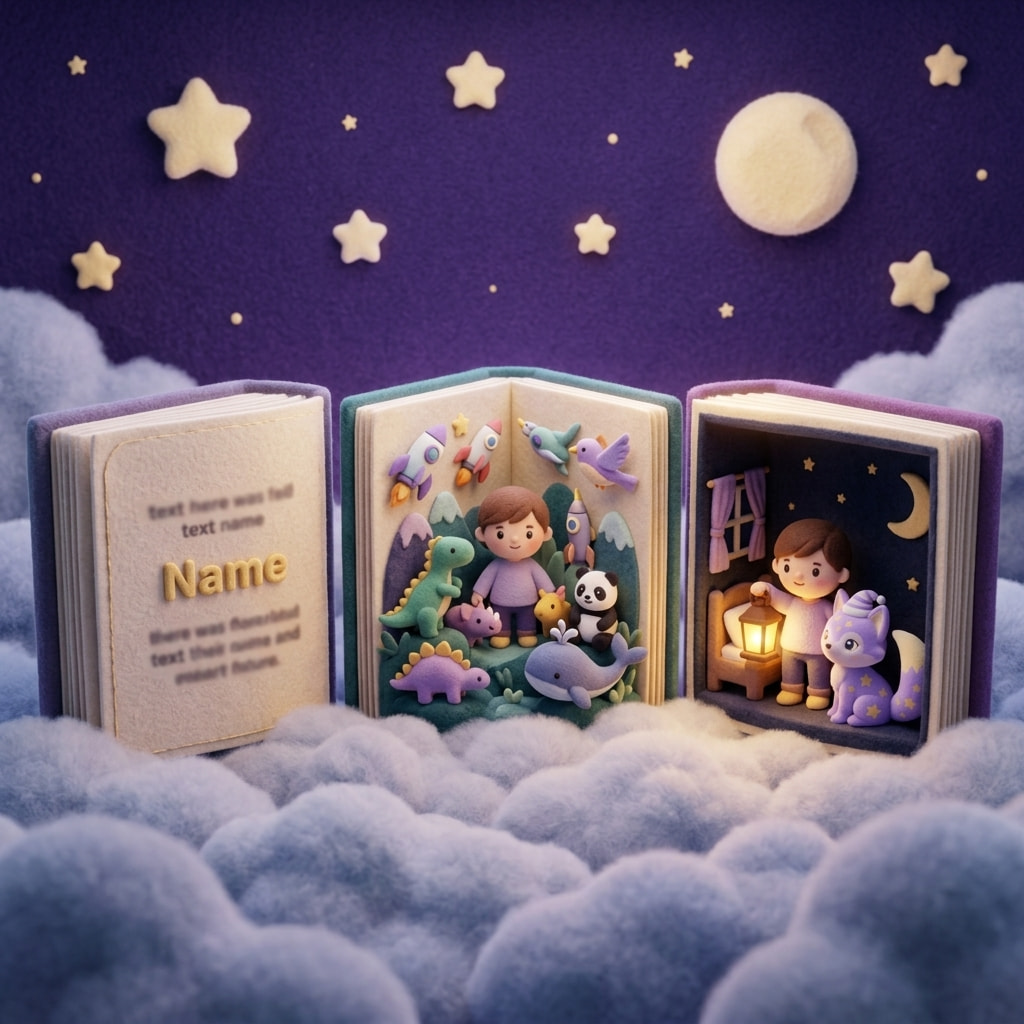
Level 2 — Name + interests. The story incorporates the child's favorite themes (dinosaurs, space, animals), preferred companions (a best friend, a pet, a sibling), and relevant details. This creates a story that feels genuinely "theirs."
Level 3 — Name + interests + context. The story adapts to a specific situation the child is facing: fear of the dark, a new baby sibling, starting school, dealing with a friend conflict. This is where personalization crosses into bibliotherapy — the use of stories as tools for emotional processing and coping.
The difference between Level 1 and Level 3 is significant. A child who is afraid of the dark does not just need to hear their name in any story. They need to hear a story where a character like them faces the dark, feels scared, discovers their bravery, and realizes they are safe. That specific narrative arc, customized to their situation, is what creates real impact. (For more on this specific challenge, see our guide to helping a child afraid of the dark.)
Personalized Stories as a Sleep Tool
Bedtime is not just about entertainment — it is about transitioning from the activity of the day to the calm of sleep. Personalized stories serve this function better than generic ones for several reasons.
They reduce bedtime resistance
One of the top reasons toddlers fight bedtime is that they want control. A personalized story gives them a form of that control without derailing the routine. When a child knows the story will be about them — featuring their name, their favorite animal, their world — they are more motivated to get into bed and listen. Parents in app reviews consistently report that personalized story apps reduce the "one more book" battle because children feel the story was made for them.
They address specific nighttime fears
Generic bedtime stories cannot address your child's specific fear of the monster under the bed, or their anxiety about a doctor's visit tomorrow. A personalized story can. When AI generates a story where your child is the brave hero who discovers that the "monster" is actually a friendly creature who is also afraid of the dark, it does what no mass-market book can: it speaks directly to your child's emotional reality.
This approach aligns with bibliotherapy, a technique used by child psychologists where stories help children process difficult emotions. Research from a 2012 study by Kushnir and Sadeh, published in the European Journal of Pediatrics, found that children who heard stories related to their nighttime fears showed significant reductions in those fears over a 4-week period.
They create a stronger sleep association
The more a child looks forward to their bedtime story, the more positive their association with the entire bedtime ritual becomes. And because personalized stories are different each night (especially with AI-generated content), you avoid the "content exhaustion" that is the number-one complaint about static bedtime story apps and books.
A child who has heard the same five books a hundred times is bored. A child who knows tonight's story will be a brand-new adventure starring them is excited to get into bed.
How Personalized Bedtime Stories Work Today
Parents today have more options than ever. Here is how the landscape breaks down.
Personalized print books
Companies like Wonderbly and I See Me offer physical books with a child's name and sometimes appearance customized. These are beautiful keepsakes, but they are static — one story, fixed content. Great as gifts; less practical as a nightly sleep tool.
AI-generated story apps
A newer category uses AI to generate unique stories each night based on your child's name, age, themes, and sometimes a specific situation. These offer infinite variety and can adapt to your child's changing interests and needs. The trade-off: voice quality and story consistency vary widely between apps.
Audio-first personalized stories
This is where the science of personalization meets the science of sleep. Audio stories do not require a screen (critical for bedtime — screen light suppresses melatonin and stimulates the brain). A calming voice telling a personalized story in the dark is one of the most effective combinations for bedtime.
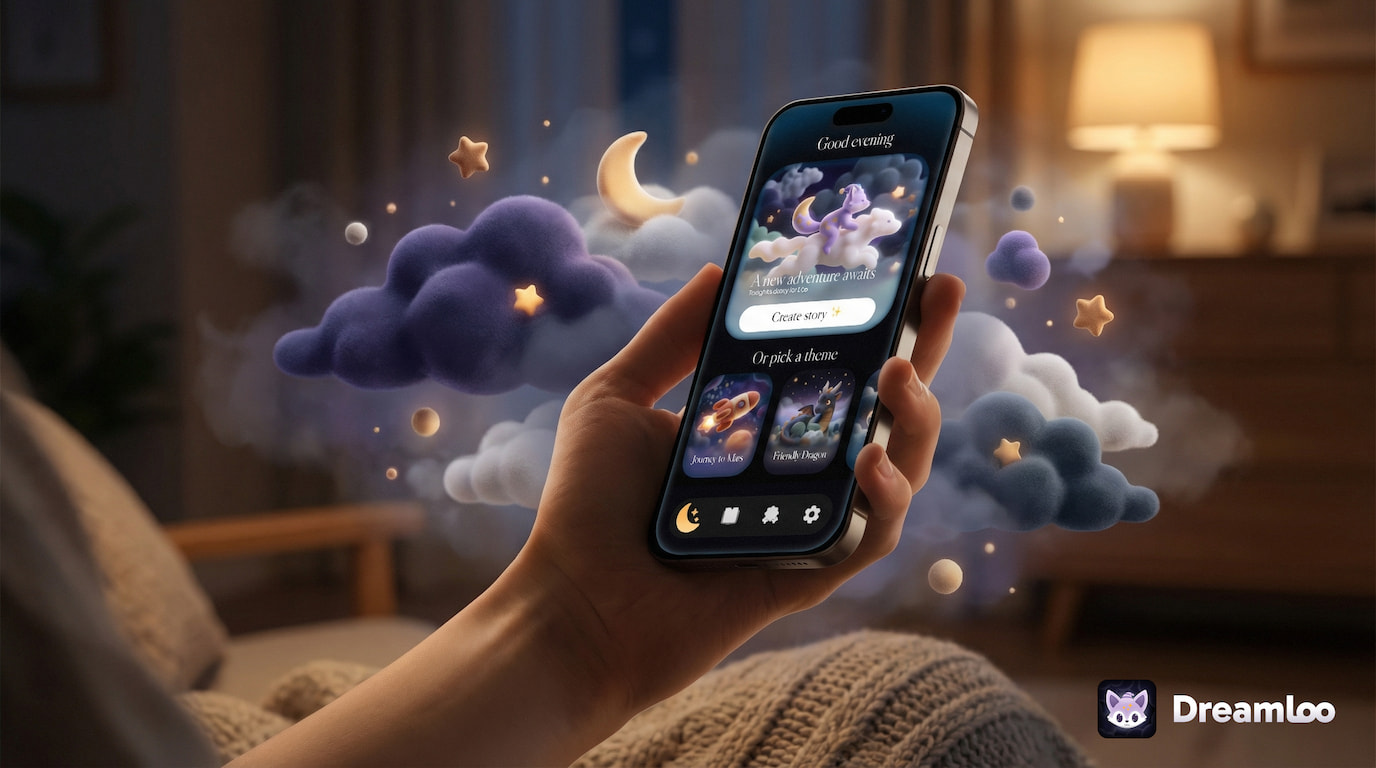
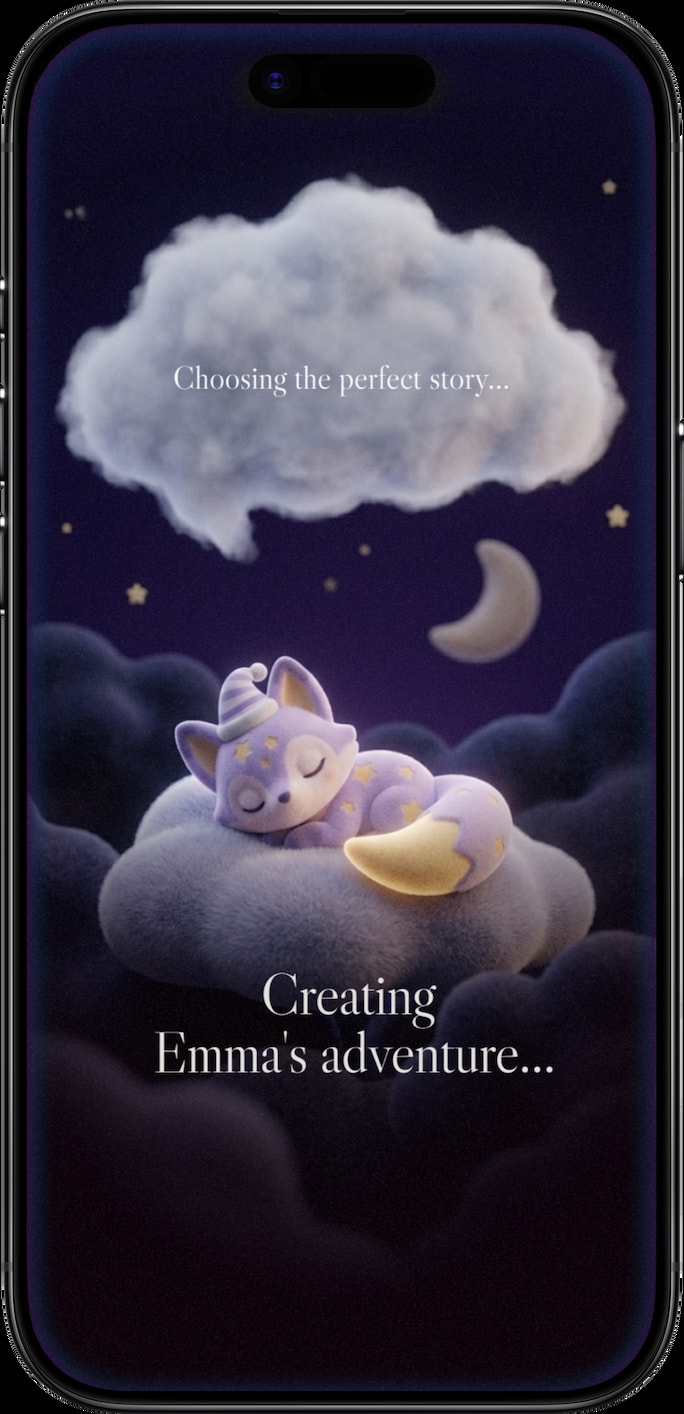
DreamLoo takes this approach: your child's name, age, favorite themes, and even specific life situations (like fear of the dark or a new sibling) are woven into an AI-generated story. The story is narrated by a soothing voice — and in the premium version, by your own voice, cloned from a 30-second recording. The narrative arc is specifically designed to slow down toward the end, with longer sentences, quieter words, and a gentle fade into sleep sounds.
The result: a personalized, screen-free, audio bedtime experience that is different every night but always designed to help your child feel safe, seen, and sleepy.
What to Look for in a Personalized Story Experience
Not all personalization is equal. If you are evaluating options, here is what actually matters:
Story quality over customization gimmicks. A story with 50 personalization fields but a weak narrative is worse than a well-crafted story with just a name. Look for options where the story arc itself — beginning, middle, resolution — is thoughtfully constructed, not just a Mad Libs template.
Age-appropriate pacing. A bedtime story for a 3-year-old should be shorter (around 5 minutes), use simpler language, and feature gentle, repetitive rhythms. A story for a 7-year-old can be longer (8-10 minutes), include more complex plots, and introduce moral themes. The personalization should include age adjustment, not just name insertion.
Sleep-optimized design. The best bedtime stories are not just "calming" — they are structurally designed to promote sleep. That means the narrative pace slows toward the end, the voice drops in volume and speed, and the story transitions into sleep sounds or silence. If a story ends with a cliffhanger or exciting climax, it is not a bedtime story.
Screen-free option. For bedtime specifically, audio beats visual every time. A child lying in a dark room listening to a story is neurologically closer to sleep than a child staring at a screen. Research shows that listening to stories activates the imagination in a way that promotes the transition from wakefulness to sleep — screens do the opposite.
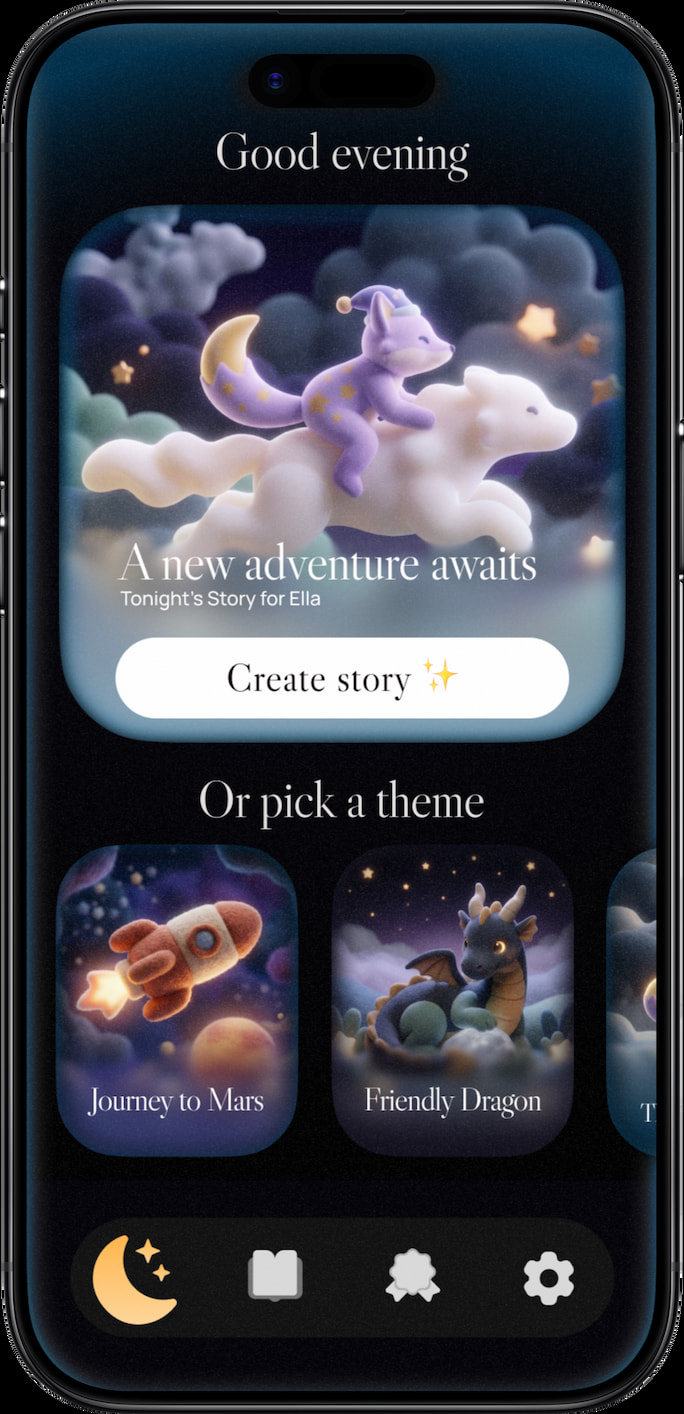
Emotional relevance. The most powerful personalized stories are not just fun — they help children process real feelings. Look for options that allow you to select themes related to what your child is actually going through. DreamLoo's Life Moments feature does exactly this, with curated story templates for situations like fear of the dark, a new sibling, dealing with anger, or building confidence.
A peek at the app
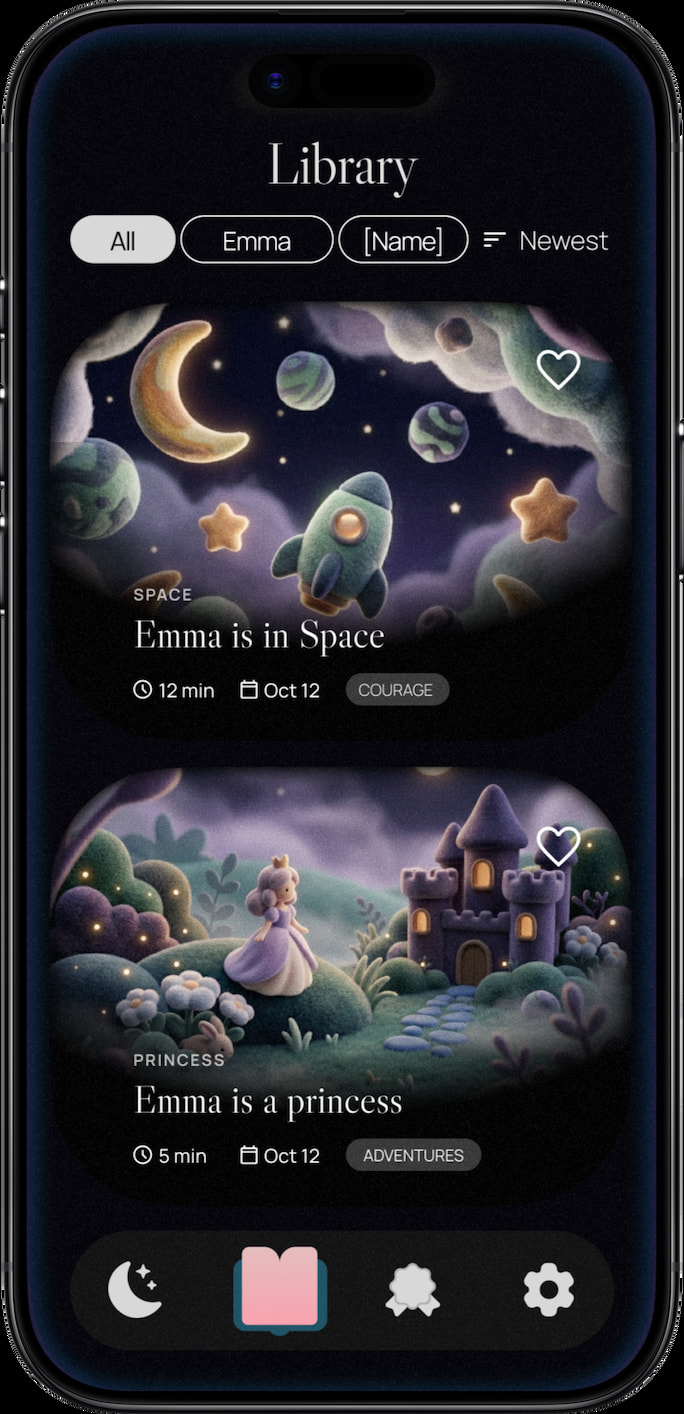
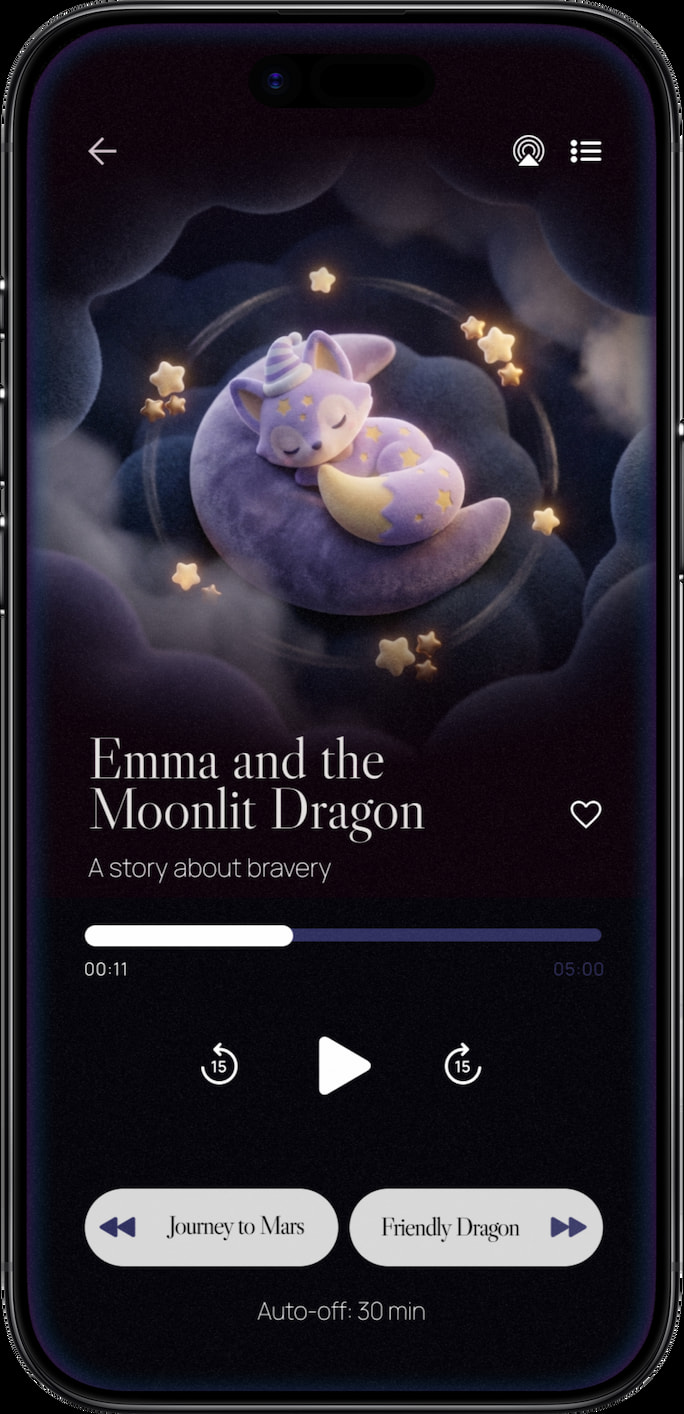
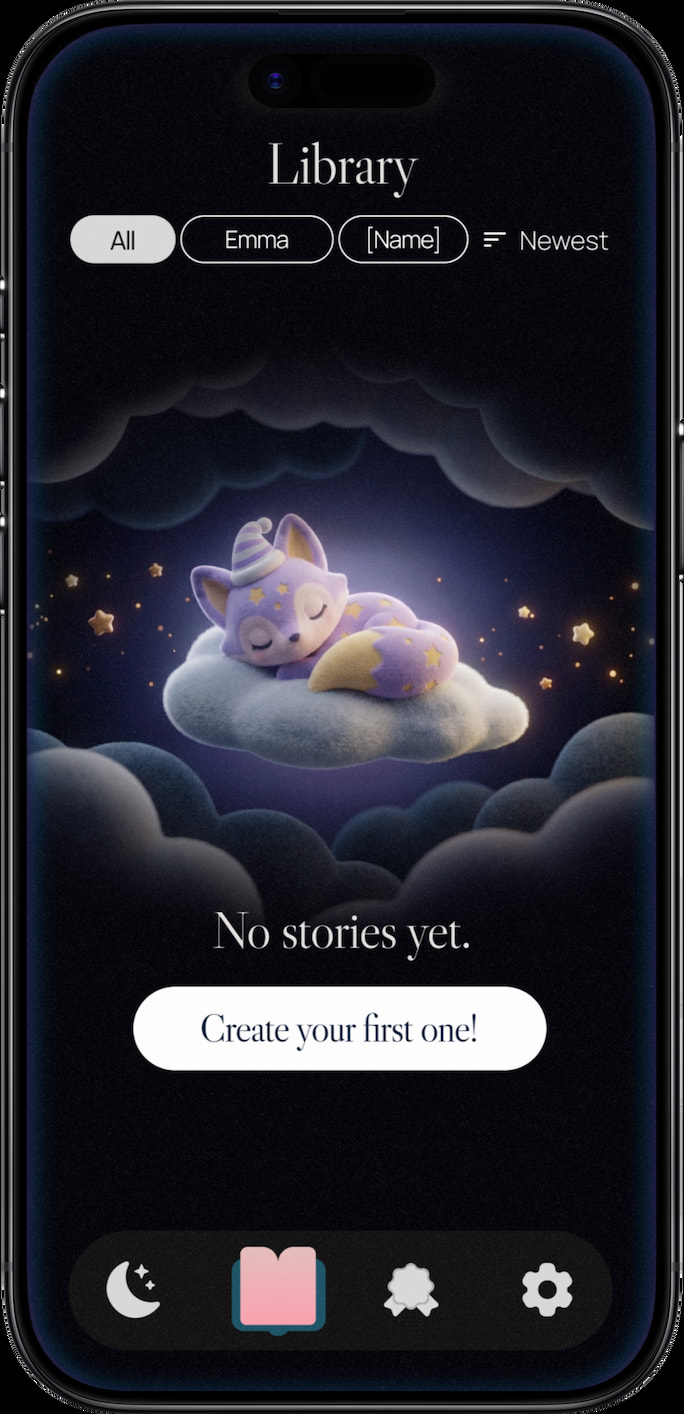
Making It Part of Your Routine
The best personalized story in the world will not help much if it is an occasional novelty rather than a nightly habit. Here is how to integrate it:
Same time, same place, every night. Personalized stories work best as part of a consistent bedtime routine. Bath, pajamas, teeth, story, sleep. The story becomes a conditioned sleep cue — your child's brain learns that this particular voice, this particular kind of story, means sleep is coming. (See our bedtime routine guide for the full walkthrough.)
Let your child have input. Before bed, let them choose a theme or a companion character for tonight's story. This "bedtime menu" approach (choosing from limited options) gives children a sense of control that reduces resistance. "Do you want a story about a jungle adventure or an ocean adventure?" Either way, they are getting into bed.
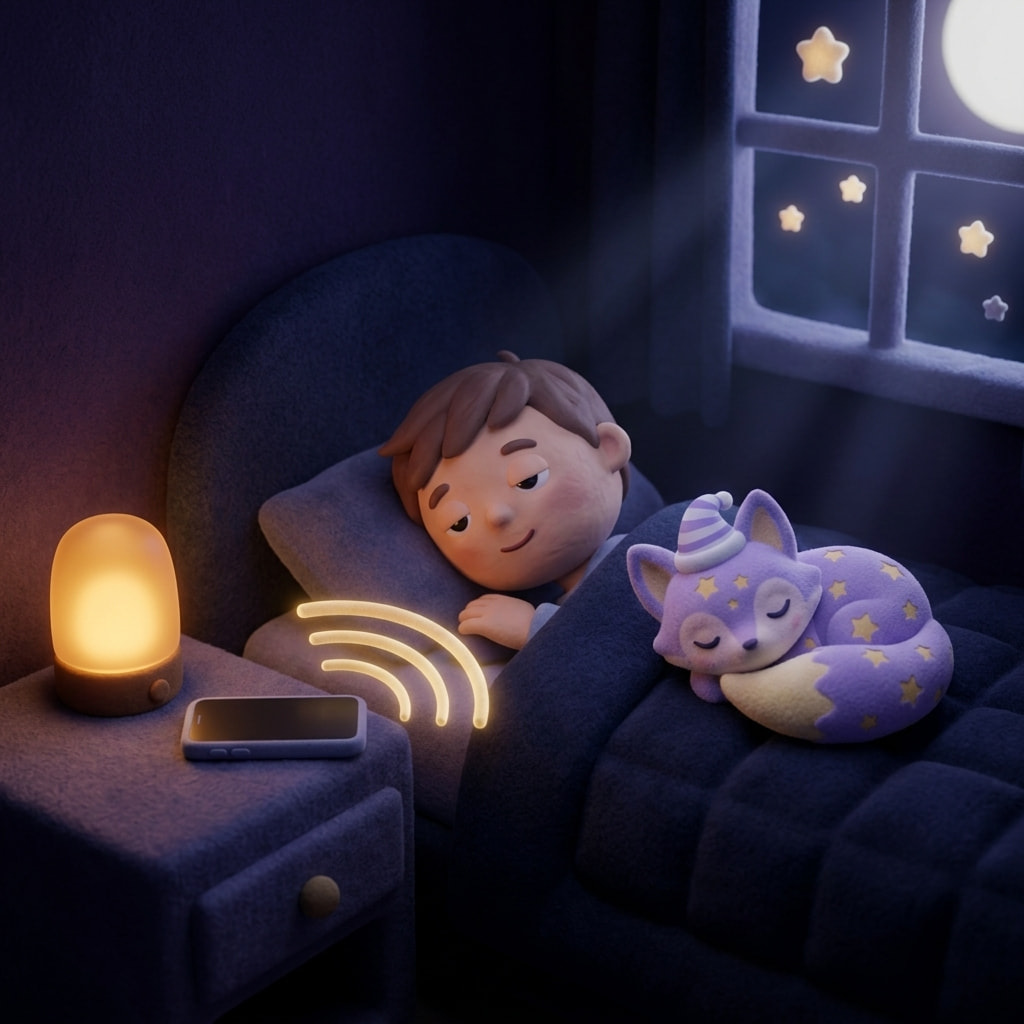
Keep the phone face-down. If you are using an app, start the story and place the phone screen-down on the nightstand. The audio plays; the screen is invisible. This is critical — the moment a child can see a screen, the sleep-promoting benefits of audio are diminished.
Use the story as a bridge. The story fills the gap between "goodnight" and actually falling asleep. That 10-15 minute window is when children are most likely to call out, get anxious, or resist sleep. A personalized story gives them something warm and engaging to focus on, so they do not fill that space with worry.