

Your 4-year-old just threw a wooden block at the wall because you peeled the banana "the wrong way." Your 7-year-old is screaming that they hate you because you said they can't have a second cookie. You are tired, embarrassed, and wondering — in the honest back of your mind — whether your child is okay, whether you are okay, and whether this is normal.
Here is the short answer: yes, their anger is almost certainly normal, and there are specific things you can do tonight that will help. Not because your child needs to stop feeling angry — anger is a healthy, human emotion — but because they need help moving through the feeling without breaking things, hurting people, or carrying the shame that comes from losing control. That help has a name: co-regulation, and it is one of the most well-supported concepts in developmental science.
This guide walks through why children's anger looks the way it does, what to actually do when a meltdown is happening, what not to do, and how to teach lifelong emotional regulation skills — starting at whatever age your child is now.
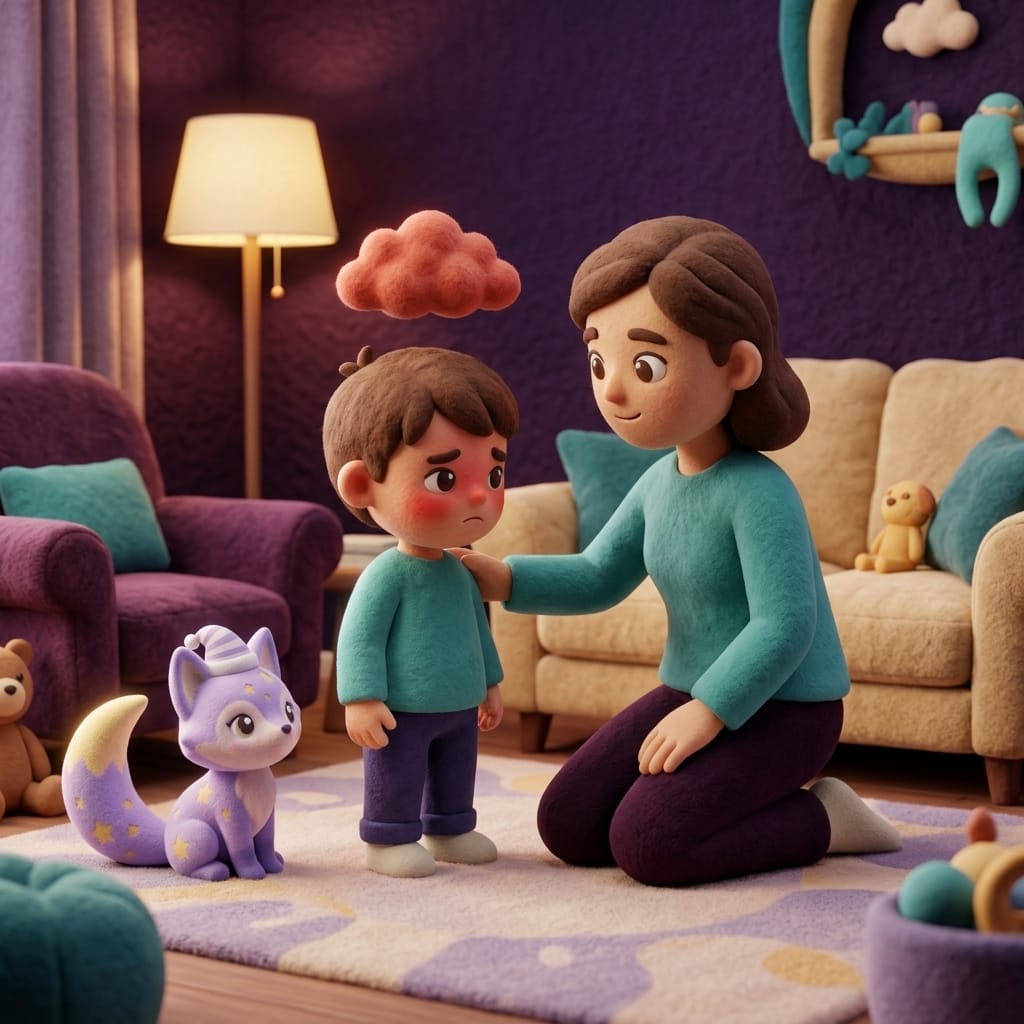
Why Children Feel Anger So Intensely (It's Not Bad Behavior)
Before fixing anything, it helps to see what is actually happening in your child's brain.
The brain is not fully wired until the mid-twenties
The region of the brain responsible for regulating emotions — the prefrontal cortex — continues to develop well into the mid-twenties. This is not a metaphor; it is visible in brain scans (Gogtay et al., 2004, PNAS). Meanwhile, the amygdala — the part that sounds the alarm when something feels threatening — is fully online from infancy.
In practical terms: your 4-year-old has a full-power alarm system and a fraction of the braking system an adult has. When something feels wrong (the banana is "broken"; the tower fell over; a sibling touched their toy), the alarm blares at maximum volume, and the brain region that would normally say "hold on, this is small" is still under construction.
Dr. Dan Siegel, clinical professor of psychiatry at UCLA, calls this "flipping your lid" — the upstairs (thinking) brain and downstairs (feeling) brain temporarily disconnect. During that moment, your child is not choosing to behave this way. They physically cannot access the part of their brain that would let them calm down with willpower alone.
Anger is usually a signal, not the problem
Anger almost always sits on top of something else: frustration, disappointment, exhaustion, hunger, fear, shame, overwhelm. The outward explosion is the tip of the iceberg. This matters because reacting to the anger itself ("stop yelling!") misses what the child is actually experiencing. Reacting to the underlying feeling ("you really wanted that cracker to stay whole") works much better, even if it seems counterintuitive.
A large body of research on emotion coaching — pioneered by Dr. John Gottman and replicated widely — shows that children whose parents acknowledge and label their underlying feelings develop stronger emotional regulation, do better academically, and have healthier peer relationships by adolescence.
Triggers worth knowing
Most "unexplained" childhood anger turns out to be one of these:
- Tiredness. An overtired child has dramatically lower emotional thresholds. If meltdowns cluster in the late afternoon or evening, sleep is the first thing to fix. See our guide to how much sleep kids need by age.
- Hunger. Blood sugar drops affect impulse control in adults and much more in kids.
- Transitions. Moving from play to dinner, screen time to bedtime, home to school. Kids need warning and ramp-down time.
- Overstimulation. Bright lights, noise, crowds, too much screen time.
- Loss of autonomy. Being told what to do, when to do it, without choices.
- Unmet needs for connection. Many angry outbursts happen when a child has gone hours without undivided attention.
Before addressing a recurring anger pattern, audit these five things first. You will often find that one of them is quietly driving the explosion.
What to Do During a Meltdown — The Co-Regulation Playbook
When your child is in the middle of a full-body rage, no explanation works. No consequence lands. No clever redirect breaks through. Here is what actually helps.
Step 1: Get your own nervous system calm first
This feels backwards but it's the single highest-leverage thing you can do. Children's nervous systems mirror their caregivers'. If you approach an escalating child with a tight jaw, fast breathing, and clipped words, their alarm system only ratchets up.
Practical versions:
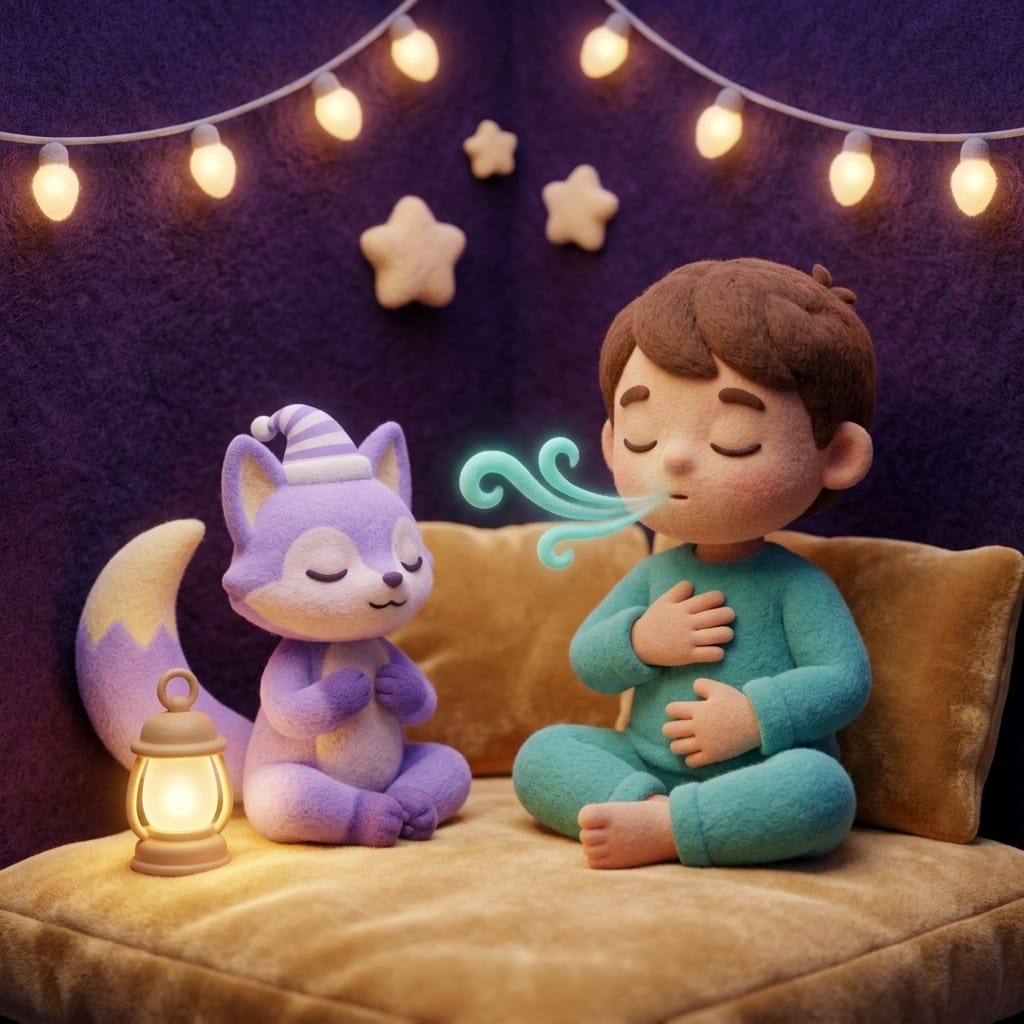
- Take a long exhale before you speak (about 6 seconds). This activates your parasympathetic nervous system.
- Drop your shoulders on purpose.
- Lower your voice one full notch below where you want to speak.
- If you are too activated, pause — "I need a moment, I'll be right back" — walk three steps away, breathe, return.
This is not an act. Children can read facial micro-tension and voice quality even if they can't name it.
Step 2: Get close, get low, get quiet
Kneel down to their eye level. Move slowly. Keep your hands open and low. Do not stand over them talking down — physically, that reads as threatening to their nervous system.
Step 3: Name the feeling, not the behavior
Instead of "stop screaming," try: "You are so angry right now. That cookie mattered to you." Naming feelings is not approving them — it is making them visible, which the brain needs in order to move past them.
This research-backed technique has a name: affect labeling. fMRI studies by Lieberman et al. (2007, Psychological Science) showed that putting words to emotions measurably reduces activity in the amygdala and increases activity in the prefrontal cortex — the regions that are offline during a meltdown. In plain terms: naming the feeling literally helps the brain calm down.
Step 4: Stay present without fixing
Do not try to distract, reason, explain why they cannot have the thing, or promise something else. Just stay. "I am here. I will stay with you until this passes." Silence is okay. Breathing near them is okay. Sitting on the floor is okay. They do not need solutions right now; they need a safe, calm presence.
Step 5: Only after the storm — talk
Once their body softens (slower breathing, tears instead of screams, leaning into you instead of pushing away), you can briefly name what happened and what to do next time: "That was so hard. When you are really frustrated, we can stomp our feet or take big breaths. Want to try it now?"
Keep it under 60 seconds. Young children cannot absorb long lessons right after a meltdown. Repetition over many months is what teaches regulation — not one perfect post-tantrum speech.
What to Avoid — The Common Parenting Moves That Backfire
Most of these feel intuitive, which is why they are hard to stop. They all share a pattern: they add stress to an already overwhelmed nervous system.
Avoid shouting louder than them
The volume war never works. When you raise your voice to match or exceed theirs, their brain registers another threat, their amygdala fires harder, and the meltdown escalates. If you slip (every parent does), apologize afterward. Your repair teaches them that strong feelings do not rupture love.
Avoid shaming or threatening ("You're being ridiculous," "I'll leave you here")
Shame is a parenting shortcut that borrows tomorrow's self-esteem for tonight's compliance. Threats ("no screen time for a week," "I'll leave without you") either escalate the panic or lose meaning when they are never enforced. Neither teaches regulation.
Avoid giving in to the demand
If the tantrum started because they wanted a second cookie, a second popsicle, a second screen session — do not deliver the cookie in the middle of the meltdown. That teaches: big feelings = I get what I want, which sets up more frequent, more intense episodes. You can acknowledge the feeling fully ("you really wanted that cookie") without reversing the limit.
Avoid long speeches in the moment
Logic does not land during a meltdown. Save the conversation for later.
Avoid forcing a hug or physical contact if they are resisting
Some children want to be held when they are upset. Others need space and recoil from touch until they are regulated. Follow their lead; stay nearby without demanding closeness.
The Long Game — Teaching Emotional Regulation Over Time
Managing a tantrum in the moment is damage control. The actual work is teaching your child the skills they will use for the rest of their life.
1. Name feelings during calm moments
Children cannot regulate emotions they cannot identify. Throughout the day, name feelings out loud — yours, theirs, characters' in stories. "The dog looks scared." "I feel a little overwhelmed today." "It looks like you are disappointed." Over years, this builds an emotional vocabulary.
2. Build a calm-down corner
Not a punishment spot. A cozy little space with soft pillows, a stuffed animal, maybe a "feelings book," a glitter jar. When your child is calm, teach them: "this is a place you can come when your feelings get really big." Go there with them the first few times. Later, many children start using it on their own.
3. Teach specific coping tools — when they are not angry
You cannot teach breathing to a child who is already dysregulated. Practice during calm moments so the tool is already familiar when they need it.
- "Smell the flower, blow out the candle." One finger under the nose to "smell" (slow inhale), finger up in front of the mouth to "blow" (slow exhale).
- Squeeze and release. Clench hands into tight fists for 5 seconds, then release. Repeat.
- Counting something tangible. "Find five blue things in this room."
- Drawing the feeling. Hand them paper and crayons; many kids move out of anger by externalizing it.
4. Use stories to build emotional literacy
Children absorb emotional skills through stories more easily than through lectures. Books and audio stories where characters face and resolve big feelings give children a kind of private rehearsal for their own emotions — a concept called bibliotherapy, well-supported in developmental psychology research.
A calming story at bedtime, when your child is in the receptive pre-sleep window, is one of the most powerful times to reinforce emotional themes. Our article on why bedtime stories help kids sleep goes deeper into this effect; and personalized bedtime stories can be particularly effective when tailored to a specific fear or situation your child is working through.
5. Model repair after your own mistakes
Every parent loses their temper sometimes. What makes the difference for children is watching the adult notice it, name it, and come back. "I spoke loudly earlier. I was frustrated, and my voice was too big. That wasn't your fault. I'm sorry. I love you." This models exactly what you are trying to teach — and it heals the rupture that happens in every family.
When Is the Anger a Sign of Something More?
Most childhood anger — even the dramatic, exhausting, daily kind — is developmentally normal and will soften as the prefrontal cortex matures. But a minority of children need more support than a parent alone can offer.
Consider talking to your pediatrician or a child therapist if you see any of the following consistently for more than a few weeks:
- Meltdowns regularly lasting longer than 25 minutes without an obvious trigger.
- Your child is regularly hurting themselves, others, or animals (beyond occasional hitting that toddlers sometimes do).
- The anger appears suddenly after a long stable period — this is often a signal of something new (a change at school, bullying, a medical issue).
- The intensity interferes with friendships, school, or family life in ongoing ways.
- You see other signs of anxiety or low mood alongside the anger, such as sleep disruption, loss of appetite, or withdrawal.
- Your child speaks negatively about themselves ("I'm a bad kid," "everyone hates me") after outbursts.
None of these mean something is "wrong" with your child — but they warrant professional input. A short course of parent coaching or play therapy often resolves anger issues that feel unmanageable on your own. Asking for help is a strength, not a failure.
Common Questions from Parents
My child is angry at me personally — they say "I hate you." How should I respond?
Short, honest, calm. "Those are big words. It's okay to be angry with me. I still love you." Don't argue, don't lecture, don't withdraw affection. Many children say this once, watch your face, and absorb the message that strong feelings don't break the relationship. That is exactly what you want them to learn.
My toddler hits when they are angry. How do I stop the hitting?
Treat it as two things at once: a limit that must be held, and a feeling that must be acknowledged. "I won't let you hit. Hitting hurts. You're so frustrated." Block the hit physically with your hand or gently move yourself out of reach. Stay calm. After the storm, practice (during calm time): "when you are angry, you can stomp, squeeze a pillow, or ask for help." Toddlers sometimes hit for months. Consistent calm limits plus naming the feeling is the only thing that works reliably.
Is it okay to put my child in their room to calm down?
Yes, as long as it is framed as a break-and-reset, not a punishment exile. "Let's go to your room together. It's too loud and busy here." Going with them is more effective than sending them alone, especially under age 6. Older children sometimes genuinely want to be alone when upset — trust their request when they make it clearly.
My partner and I disagree on how to handle anger. What do we do?
Agree on the non-negotiables first — you never hit, you never shame, you never mock — and allow some variation in style beyond that. Children benefit from seeing two calm adults who handle things slightly differently more than they benefit from a perfectly synchronized parenting system. What they notice most is whether you respect each other during disagreements.
Can screen time make my child angrier?
Often yes. Over-stimulation from fast-paced content, plus the cortisol spike when screens are turned off, is a common hidden driver of "sudden" tantrums. If you see a pattern, experiment with reducing screen duration or shifting to slower content. Our guide on screen time before bed covers the evening effect specifically.