

Your 3-year-old melts down every evening at 5:30 PM. Your 7-year-old cannot focus on homework. Your toddler wakes up crying at 2 AM for the third night in a row. Before you start Googling behavioral issues, ask a simpler question first: is your child getting enough sleep?
The answer is probably no. According to the CDC, about 35% of U.S. children regularly sleep less than recommended for their age. And the consequences go beyond crankiness — insufficient sleep in childhood is linked to attention problems, emotional dysregulation, weakened immunity, and even measurable changes in brain structure.
This guide breaks down exactly how many hours of sleep children need at every age, what happens when they do not get enough, and practical steps you can take tonight to close the gap.
The Official Recommendations: Sleep Hours by Age
The American Academy of Sleep Medicine (AASM) — endorsed by the American Academy of Pediatrics — established these guidelines after a panel of 13 sleep experts reviewed 864 scientific studies. These numbers represent total sleep in a 24-hour period, including naps.
Newborns (0-3 months): 14-17 hours
No official AASM recommendation exists for this group because sleep patterns vary widely. Most newborns sleep in stretches of 1-4 hours around the clock.
Infants (4-12 months): 12-16 hours (including naps)
By 4-6 months, many babies develop a circadian rhythm and begin sleeping longer stretches at night. Naps remain critical — typically 2-3 naps per day.
Toddlers (1-2 years): 11-14 hours (including naps)
Most toddlers transition from two naps to one afternoon nap around 15-18 months. Night sleep consolidates to approximately 10-12 hours.
Preschoolers (3-5 years): 10-13 hours (including naps)
Many children drop their last nap between ages 3 and 5. When that happens, bedtime may need to move earlier to compensate. A 4-year-old who stops napping but still goes to bed at 8:30 PM might not be getting enough.
School-age (6-12 years): 9-12 hours
All sleep should come from nighttime by this age. A 6-year-old likely needs closer to 11-12 hours, while a 10-year-old may do well with 9-10.
These are ranges, not one-size-fits-all numbers. Some children naturally need the higher end; others do fine at the lower end. The key is paying attention to how your child functions during the day, not just counting hours on a clock.
See every age at a glance. Our free sleep-needs-by-age visualizer lets you drag through any age from newborn to 12 years and see total hours, nights, naps, and wake windows instantly. No sign-up.
What Does "Enough Sleep" Actually Look Like?
Numbers are helpful, but behavior is a better indicator. Here is how to tell whether your child is well-rested or running on empty.
Signs your child IS getting enough sleep
- They wake up on their own (or with minimal effort) at roughly the same time each morning.
- Their mood is generally stable through the day — not perfect, but not consistently volatile.
- They can focus on tasks appropriate for their age.
- They do not regularly fall asleep in the car, stroller, or during quiet activities.
- They do not resist bedtime with unusual intensity.
Signs your child is NOT getting enough sleep
In toddlers and preschoolers:
- Frequent meltdowns, especially in the late afternoon and evening.
- Hyperactivity that looks like they are "not tired" (this is counterintuitive — overtired kids often speed up, not slow down).
- Extreme clinginess or separation anxiety.
- Waking up cranky and difficult to console.
- Falling asleep within seconds of getting in a car.
In school-age children:
- Difficulty waking up in the morning and needing multiple alarms or wake-up calls.
- Trouble concentrating on schoolwork.
- Increased irritability, impatience, or emotional outbursts.
- Complaints of headaches or stomachaches.
- Declining grades or teacher comments about attention.
If you are seeing three or more of these signs consistently, sleep duration is the first thing to investigate.
What Happens When Kids Do Not Get Enough Sleep
This is not just about crankiness. The research on childhood sleep deprivation is sobering.
Brain development changes
A landmark study from the University of Maryland, published in The Lancet Child & Adolescent Health, found that school-age children who slept less than 9 hours per night had measurably less grey matter in brain areas responsible for attention, memory, and impulse control — compared to children who met the recommended hours. These differences persisted after two years of follow-up, suggesting the effects are not quickly reversible.
Academic performance drops
Research from the Douglas Research Centre found that children with reduced sleep score lower on tests of verbal creativity, problem-solving, and general IQ. Students with grades of C, D, or E averaged 25-30 minutes less sleep per weeknight than their classmates earning A's and B's.
Behavioral and emotional problems increase
A Harvard-led study following over 1,000 children found that those who consistently got insufficient sleep in preschool and early school years had significantly higher rates of attention problems, emotional dysregulation, and difficulties with peer relationships by age 7 — even after controlling for other factors.
Physical health is affected
Insufficient sleep is linked to an increased risk of childhood obesity, due in part to hormonal changes that affect appetite regulation. The CDC also notes associations between short sleep and higher rates of injuries, hypertension, and weakened immune function in children.
None of this is meant to create panic. It is meant to reframe sleep as something that matters just as much as nutrition and exercise — because the evidence says it does.
Sleep Needs at Each Stage: What Parents Should Know
Newborns (0-3 months): Survival mode
There is no "schedule" during this phase. Newborns cycle between sleep and wakefulness every 1-4 hours regardless of day or night. Your job is not to train sleep — it is to create a safe sleep environment and respond to feeding cues.
Around 2-3 months, you can start introducing the difference between day and night: keep daytime bright and active, nighttime dark and quiet. This helps the circadian rhythm begin to develop.
Infants (4-12 months): Building a rhythm
By 6 months, most infants are physiologically capable of sleeping 6-8 hours at night without feeding. This is when a consistent bedtime routine starts to make a real difference.
A typical schedule might look like: 2-3 naps during the day (total of 2-4 hours), plus 10-12 hours of nighttime sleep. By 9-12 months, many babies consolidate to 2 naps.
Toddlers (1-2 years): The nap transition
The biggest sleep shift in this period is moving from two naps to one. This usually happens between 15 and 18 months. Signs your toddler is ready: they resist the morning nap, the morning nap pushes bedtime too late, or they sleep fine with just an afternoon nap.
During the transition, bedtime may need to move earlier temporarily. A toddler who was going to bed at 8 PM with two naps might need a 7:15 PM bedtime with one nap while they adjust.
Most toddlers need about 11-12 hours of nighttime sleep plus a 1-2 hour afternoon nap.
Preschoolers (3-5 years): Dropping the last nap
Between 3 and 5, most children stop napping entirely. This is normal — but it means all their sleep needs must be met at night. If your 4-year-old dropped the nap and you did not move bedtime earlier, they could be running a 1-2 hour sleep deficit every single day.
For a nap-free preschooler, a bedtime of 7:00-7:30 PM is often appropriate if they wake around 6:30-7:00 AM. That gives them 11-12 hours, which is right in the middle of the recommended range.
School-age (6-10 years): The overlooked group
School-age children's sleep often gets less attention than babies' or toddlers' because the bedtime battles usually decrease. But this is the age when sleep quietly erodes — homework, extracurriculars, later bedtimes, and screen time all chip away at total hours.
A 7-year-old who goes to bed at 9 PM and wakes at 6:30 AM is getting 9.5 hours. That is within the recommended range, but on the lower end. If that child shows signs of being chronically tired, moving bedtime to 8:30 or even 8:00 PM could make a measurable difference.
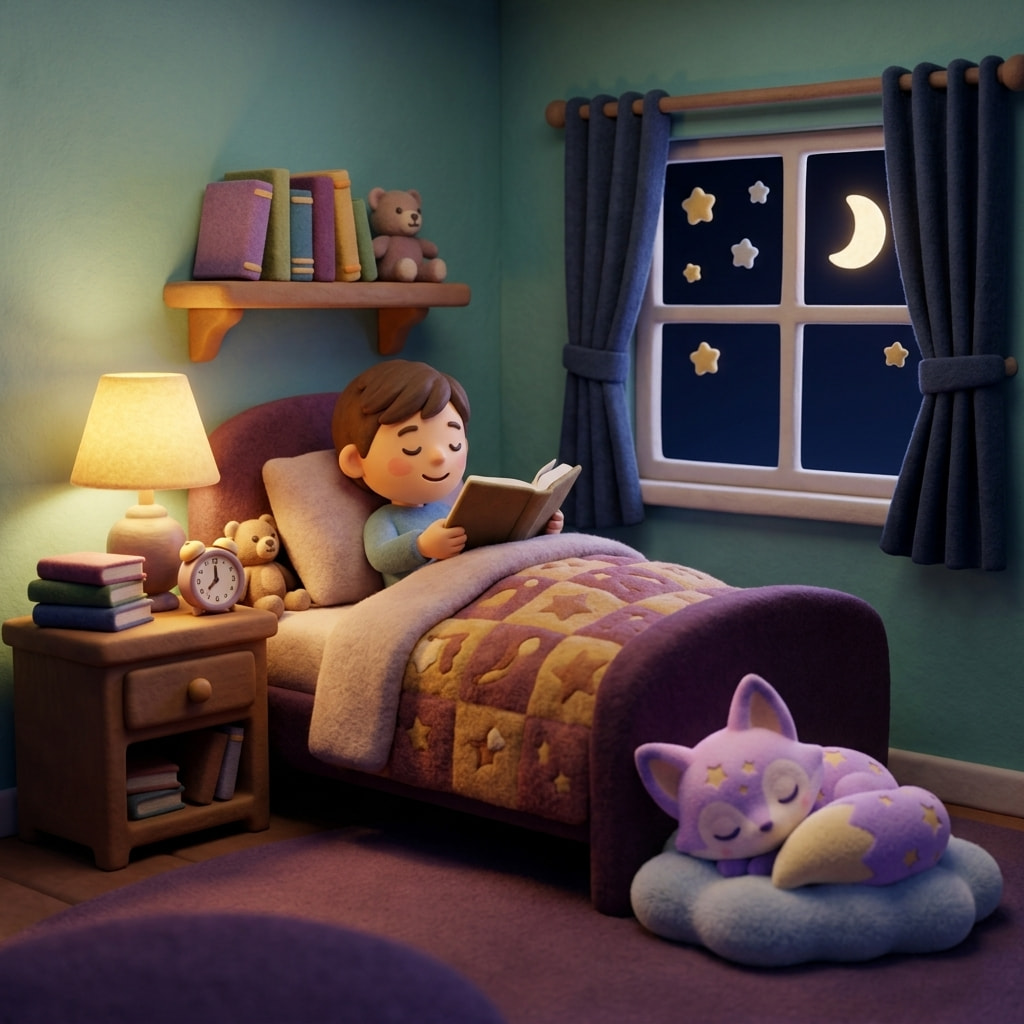
How to Help Your Child Get More Sleep (Starting Tonight)
Set a non-negotiable bedtime — and protect it
Work backward from your child's wake-up time. If they need to be up at 6:45 AM and need 11 hours of sleep, lights out should be at 7:45 PM. The bedtime routine starts 20-30 minutes before that. Write it down. Treat it like an appointment that does not get bumped.
Build a wind-down routine
A consistent bedtime routine is not just a nice idea — a study of over 10,000 families across 14 countries found a clear dose-dependent relationship between routine consistency and sleep quality. Children with a nightly routine slept over an hour longer than those without one.
The routine does not need to be elaborate. Bath (or face wash), pajamas, teeth, story, goodnight. Same order, same time, every night. For a deeper walkthrough, see our complete bedtime routine guide.
Cut screens before bed
The AAP recommends turning off all screens at least one hour before bed. This is not just about blue light (although that matters — research shows screen light can suppress melatonin by up to 90% in preschoolers). It is also about the stimulation. Interactive screens — games, apps, swiping — activate the brain at exactly the moment you need it calming down. Read more in our article on screen time and kids' sleep.
Dim the lights
Start dimming lights in your home 30-60 minutes before bedtime. This signals the brain to produce melatonin. Overhead fluorescents at 8 PM are working against you. Switch to lamps, close curtains, and keep the path from bath to bed as calm and low-lit as possible.
Replace screen time with audio
If your child is used to watching something before bed, the transition away from screens can be rough. Audio stories are the easiest replacement — they give your child something engaging to focus on without any light stimulation. A calming story in a soothing voice does double duty: it fills the "entertainment" gap and acts as a sleep cue.
DreamLoo's bedtime stories are designed with this in mind — they gradually slow in pace and volume, easing children toward sleep instead of winding them up. They work especially well for the 20-minute gap between "goodnight" and actually falling asleep, when children are most likely to call out, resist, or get anxious.
Optimize the sleep environment
Keep the bedroom cool (65-70°F / 18-21°C), dark (blackout curtains help enormously), and consistent. A white noise machine or gentle sleep sounds can mask household noises that cause partial awakenings. Consistent background sound is especially useful for light sleepers.
Be consistent on weekends
Letting kids stay up an hour or two later on weekends and sleeping in feels harmless, but it creates "social jet lag" — a disruption of the body clock that takes days to readjust. Try to keep bedtime and wake time within 30-60 minutes of the weekday schedule.
Common Questions from Parents
How do I know if my child needs more sleep than average?
Some children simply need more sleep than their peers. If your child consistently falls at the higher end of the recommended range and still shows signs of tiredness when you try to reduce it, trust what you are seeing. The ranges exist because individual variation is real. There is no prize for needing less sleep.
My toddler fights bedtime. Does that mean they are not tired?
Usually the opposite. A toddler who fights bedtime is more often overtired than undertired. When children miss their sleep window, their bodies produce cortisol and adrenaline as a compensatory response, which makes them hyperactive and resistant. Try moving bedtime 15-30 minutes earlier and see what happens.
Is it okay if my child gets their sleep hours but in a different pattern?
For babies and toddlers, yes — naps count toward the total. But by age 6-7, all sleep should ideally come in one consolidated nighttime block. Fragmented sleep (even if the total hours add up) is less restorative than one solid stretch because it disrupts sleep cycle completion.
Should I give my child melatonin?
Melatonin can be helpful in specific cases under the guidance of your pediatrician — particularly for children with neurodevelopmental differences or significant circadian rhythm disruption. But it is not a substitute for healthy sleep habits. If bedtime is a struggle, address the routine and environment first. Talk to your doctor before starting any supplement.
My 5-year-old stopped napping but seems tired. What do I do?
Move bedtime earlier. When naps end, the lost hours need to come from somewhere. If your child was napping from 1-2:30 PM and goes to bed at 8 PM, try shifting bedtime to 7:00-7:15 PM. The transition can take a few weeks. Some children also benefit from a brief "quiet time" in the afternoon — not sleeping, just resting with books or calm play — to recharge without disrupting nighttime sleep.