

It is 7:15 p.m. Bath is done, teeth are brushed, and your four-year-old is doing laps of the hallway making siren noises. You said "calm down" twice. It did nothing. Now it is 7:40, everyone is frustrated, and bedtime — the thing you were trying to protect — has slipped half an hour later.
Here is the part most parents are never told: "calm down" is not an activity. It is an outcome. A child cannot flip from wired to drowsy on command any more than an adult can fall asleep because someone told them to. What moves a child across that gap is a sequence of calming activities before bed — small, repeatable, body-first actions done in the same order every night.
This works because predictability is itself soothing. In a landmark study of more than 400 young children, a consistent nightly bedtime routine led to faster sleep onset, fewer night wakings, and better-rested parents (Mindell et al., 2009). This article gives you the science of what actually calms a child's body, a menu of activities that work, an age guide, the "calming" things that secretly backfire, and a 20-minute wind-down you can run tonight.
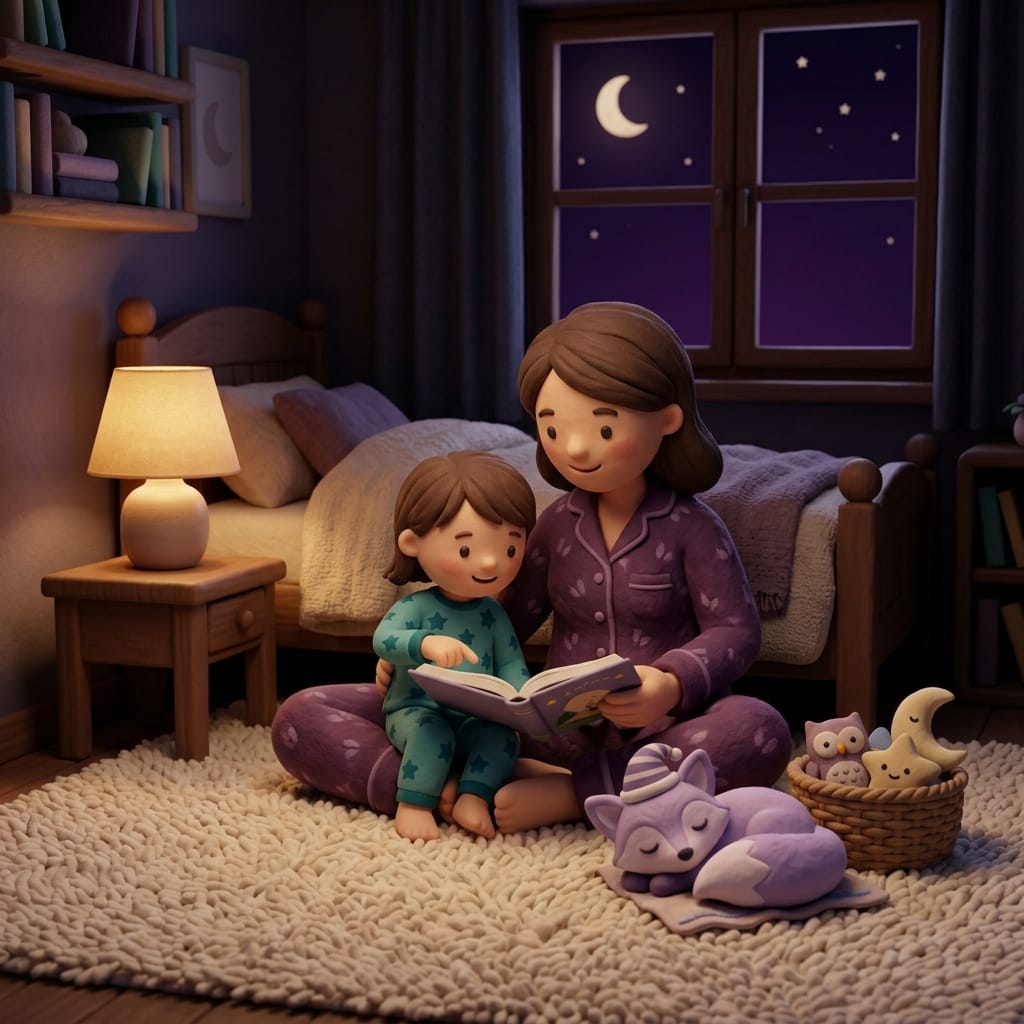
Why "calm down" isn't a command — it's a runway
A child's nervous system has two broad modes: alert (sympathetic — "go") and rest (parasympathetic — "slow"). Play, screens, bright light, and excitement keep the alert system running. Sleep needs the rest system in charge. You cannot skip straight from one to the other; you need a runway.
This is also why an overtired child often seems more energetic at bedtime, not less. When a child stays up past the point of easy sleep, the body releases more cortisol and adrenaline to keep going. The result is the "second wind" — giddy, silly, or irritable behavior that looks nothing like sleepiness but is actually a tired body fighting itself. (If this is a nightly battle, our guide on the overtired child is worth a read.)
The takeaway: calming activities are not a way to make a child sleepy. They are a way to lower the alert system in time, so natural sleepiness can take over before the overtired surge does. Start the runway earlier than feels necessary.
The science: what actually calms a child's body
Calming activities are not interchangeable feel-good ideas. The ones that work share specific physical effects.
They lower core body temperature. Sleep onset is triggered partly by a drop in core temperature. A warm bath about one to two hours before bed raises skin blood flow, then lets the body shed heat afterward — a meta-analysis found this measurably improves how fast both adults and children fall asleep (Haghayegh et al., 2019). The bath does not work because it is relaxing; it works because of the cooldown that follows.
They reduce light. Light is the master signal for the sleep hormone melatonin. Bright light — especially from screens — suppresses melatonin and delays sleepiness (Chang et al., 2015). Dimming the room is not ambiance; it is biology.
They slow the breath. Slow, deep breathing shifts the body toward the parasympathetic "rest" state — lower heart rate, lower arousal. A systematic review found slow breathing reliably increases this calming response (Zaccaro et al., 2018). A child does not need a meditation practice; a few rounds of slow "belly breaths" do real physiological work.
They are repetitive and predictable. Novelty engages the alert brain. Sameness signals safety. This is why the same quiet story or song works better as a wind-down than an exciting new one — and why routine itself is one of the strongest sleep tools we have (Mindell & Williamson, 2018).
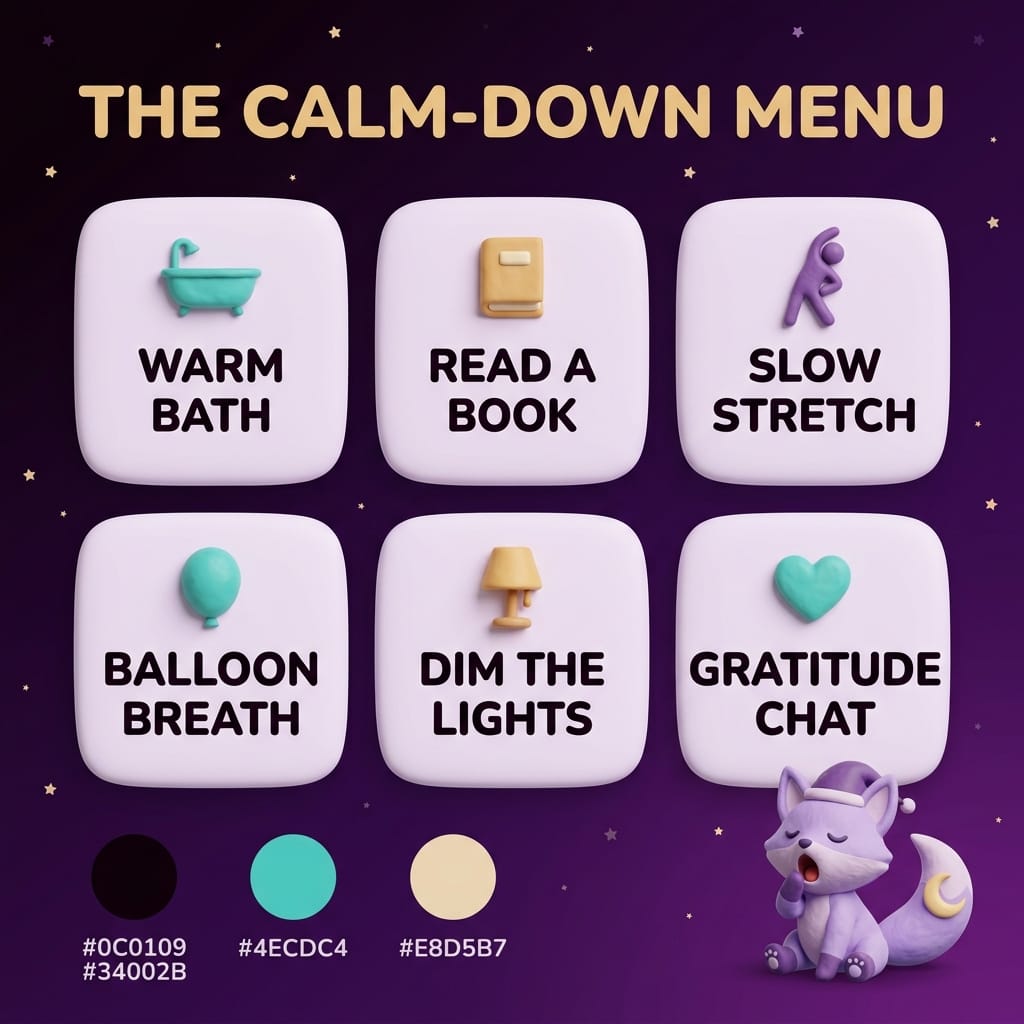
The calm-down menu: activities that work
Pick two or three. Do them in the same order every night. That fixed mini-sequence is more powerful than any single activity.
Body calmers
- Warm bath — best started 60–90 minutes before lights-out for the cooldown effect.
- Slow stretching or "melting" — a few gentle stretches, then "go floppy like a noodle." Releases physical tension.
- Back rub or gentle massage — slow, predictable pressure is one of the fastest parasympathetic switches for young children.
Mind calmers
- Reading together — a picture book or chapter at a slow, low voice. A cornerstone for a reason; see why bedtime stories help kids sleep.
- A quiet narrated story — eyes closed, lights low, a calm voice carrying the load when you are too tired to perform.
- Gratitude or "rose and thorn" chat — naming one good and one hard thing from the day offloads a busy mind so it stops working at bedtime.
Breath and sensory calmers
- Balloon breath — hands on belly, breathe in slowly to "inflate the balloon," out long and slow to "let the air whoosh." Five rounds.
- Dim the lights — well before bed, not at the last second. Lamp instead of overhead. Bathroom light low.
- Soft, steady sound — quiet music or low sleep sounds to mask the house and cue rest.
Calming activities by age
The menu shifts as children grow.
Toddlers (1–3 years). Short, physical, highly predictable. Warm bath → pajamas → one book → a short song or back rub. Toddlers cannot self-direct calming, so the routine has to carry them. Keep total wind-down around 20 minutes and the sequence identical night to night.
Preschoolers (3–5 years). Now you can add a participatory calmer: balloon breath, "noodle" stretches, or a one-line gratitude. This is also the age of imagination and nighttime fears, so a gentle, reassuring story matters — a calm narrative gives an active imagination somewhere safe to go instead of inventing things in the dark.
School-age (6–10 years). Bigger feelings and busier minds. Add a brief "download" — a 60-second chat about anything on their mind — so worries do not surface the moment the light goes off. Quiet reading, slow breathing, and a consistent lights-out time do the heavy lifting at this age.
Not sure what time the wind-down should start? Work backwards from an age-appropriate sleep need with our free bedtime calculator — then begin calming activities 20–30 minutes before that bedtime so your child arrives drowsy, not wired.
Activities that look calming but aren't
Some popular "wind-down" choices quietly sabotage sleep.
Screens — even gentle ones. A calm cartoon still emits melatonin-suppressing light and still engages the alert brain. Pediatric guidance is no screens in the hour before bed (American Academy of Pediatrics, 2016). An audio story with the screen off is a genuine calmer; a video is not, however soothing it seems.
Tickling, wrestling, or chase games. Fun, connecting — and a direct hit to the alert system right when you need it down. Save rough-and-tumble play for earlier in the evening.
Sugary or large snacks. A heavy or sugary bedtime snack can work against settling. A small, plain snack earlier is fine; dessert at the bedroom door is not.
Big emotional conversations. The hard talk about the friendship problem or tomorrow's test is important — but not in the final ten minutes. Heavy topics activate the mind exactly when it should be quieting. Handle them earlier; keep the last window light.
Bright bathrooms and last-minute light. Teeth-brushing under a harsh bathroom light can undo 20 minutes of dimming. Keep the whole back end of the routine low-lit.
Building your 20-minute wind-down
A workable preschooler example, adjust to your child:
- T-minus 30 min: Lights down a notch across the house, screens off, voices lower. The environment starts the signal before any activity does.
- T-minus 20: Warm bath or a wash, into pajamas. (On bath nights, start earlier for the cooldown.)
- T-minus 12: Into bed. One book or one quiet narrated story, low lamp only.
- T-minus 5: Five rounds of balloon breath, then one good thing / one hard thing from the day.
- T-minus 1: Lamp off, sound machine or quiet music on low, the same one-line goodnight phrase every night.
The exact steps matter less than this: two or three calmers, same order, same approximate time, every single night. The repetition is the calming agent.
When calm won't come
Most resistance is a routine problem, not a medical one — too short a runway, too late a start, a screen too close to bed. Fix those first.
But talk to your pediatrician if, despite a consistent calm routine, your child regularly takes more than 45–60 minutes to fall asleep, shows real bedtime anxiety or distress (not just stalling), wakes frequently and cannot resettle, snores loudly or seems to stop breathing in sleep, or is exhausted and dysregulated during the day. Persistent struggles can point to bedtime anxiety, sleep-disordered breathing, or other causes that calming activities support but do not treat.
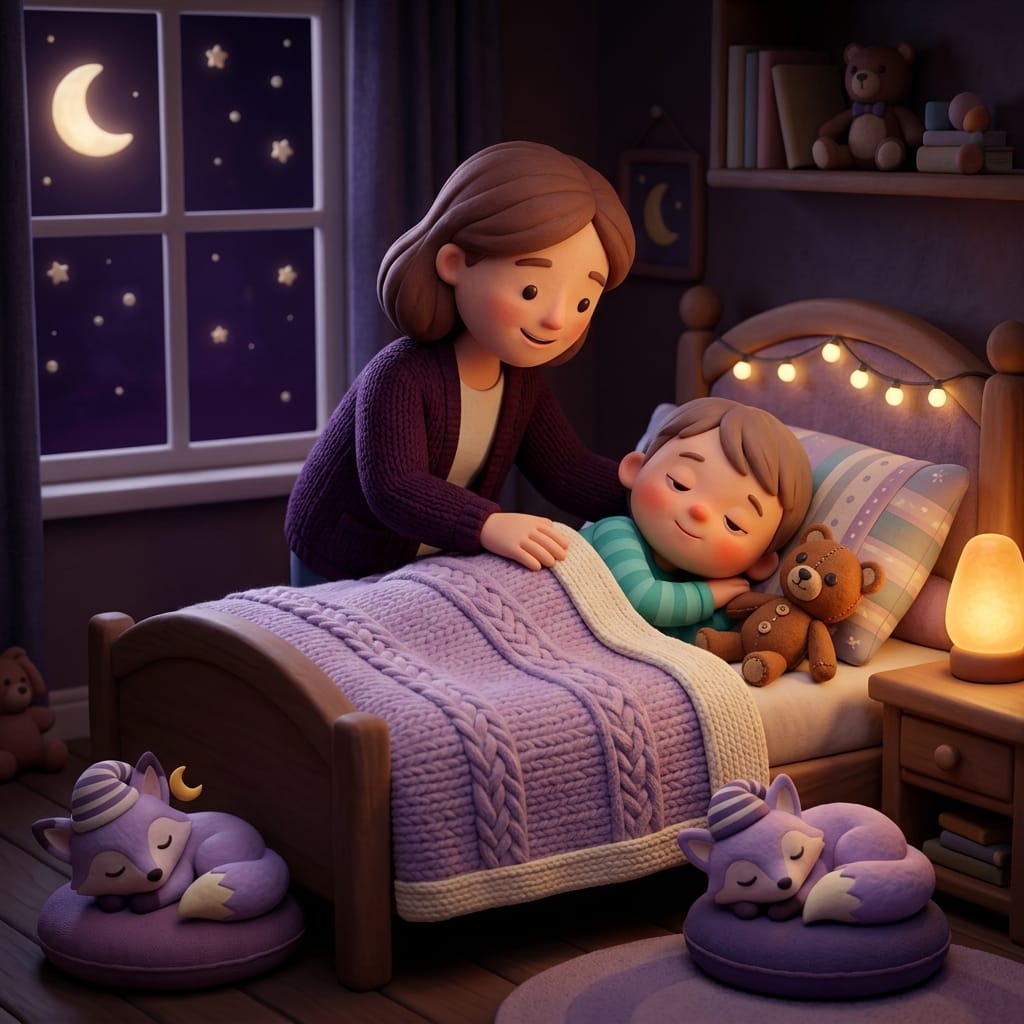
For the everyday wired-at-bedtime child, though, the answer is rarely a new trick. It is an earlier, slower, more predictable runway — the same small sequence of calming activities, night after night, until the body learns the path on its own.
Common Questions from Parents
My child stalls during the calming routine — is it working?
Stalling ("one more book," "I need water") is usually a sign the routine is too long or too negotiable, not that calming activities don't work. Tighten it: a fixed, short sequence with a clear, non-negotiable endpoint stalls less than an open-ended one. Decide the steps in advance, narrate them ("after this book, lamp off"), and keep the order identical every night. Predictability removes the openings a child uses to negotiate, which is itself calming for both of you.
Should the calming routine be the same on weekends?
As much as possible, yes. The power of a wind-down comes from repetition, and a child's body clock does not know it is Saturday. Bedtime can shift modestly on weekends, but keeping the same calming sequence — even at a slightly later hour — preserves the signal. Wildly different weekend nights are one of the most common reasons a good weekday routine stops working.
My toddler fights every calming activity. What now?
Resistance often means the runway started too late and the overtired surge already hit. Try moving the entire wind-down 20–30 minutes earlier for several nights — counterintuitive, but an earlier start usually reduces the fight, not increases it. Also shrink the menu: an exhausted, resisting toddler does better with two simple steps done calmly than five steps done as a battle. Lower your own voice and pace first; toddlers co-regulate off the nearest adult.
Can audio stories replace reading as a calming activity?
They are an excellent complement, especially on nights when you are depleted and a tired, flat read-aloud won't land. A calm narrated story keeps the wind-down soothing without requiring you to perform. The key is screen-off, lights-low, steady-voice — that is genuinely calming, unlike video. Many families read on some nights and use a gentle audio story on others; both reinforce the same predictable, quieting signal.