

It is 4 a.m. The house is silent — and that is exactly the problem. A car door thuds outside, the heating clicks on, an older sibling pads to the bathroom, and your toddler is suddenly bolt upright and wailing. You did everything right at bedtime. The thing that woke her was a sound you barely noticed.
This is the gap that sleep sounds for kids are designed to fill. Used well, a steady background sound smooths over the sharp, unpredictable noises that fracture a child's sleep. In one classic study, 80% of newborns fell asleep within five minutes when white noise was played, compared with 25% with no sound (Spencer et al., 1990). That is not magic — it is masking, and it works at every age.
But "play some white noise" is not a plan. The wrong sound, the wrong volume, or the wrong placement can do nothing — or, in the case of volume, a little harm. This guide covers what sleep sounds actually do, which type fits which child, the safe-volume rule every parent should know, and how to use sound without your child becoming hooked on it.
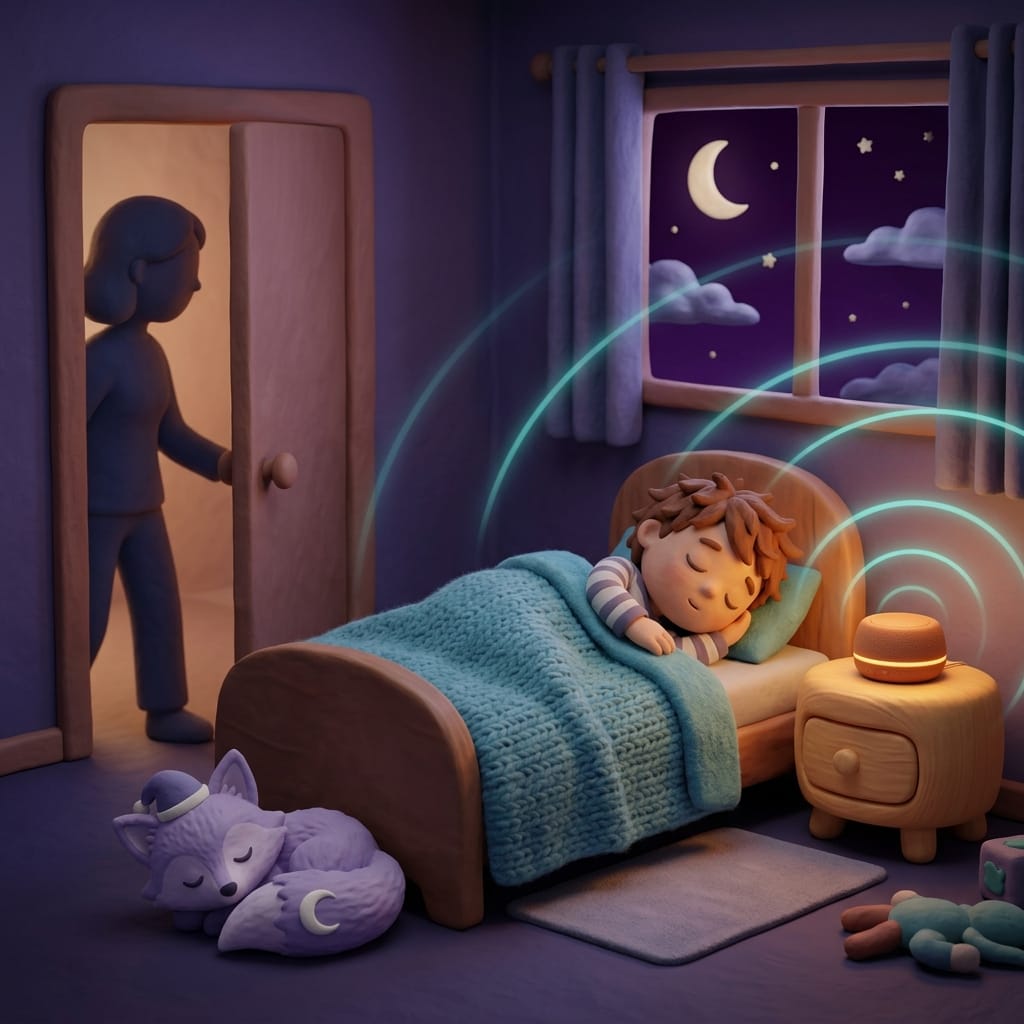
What sleep sounds actually are
Sleep sounds are any steady, continuous audio played to help a person fall and stay asleep. For kids, the useful categories are: colored noise (white, pink, brown), looped nature sounds (rain, ocean, wind), and soft music or spoken audio (lullabies, quiet stories). They are not the same tool, and they do not all work the same way.
The two that do the heavy lifting — colored noise and steady nature loops — work by sound masking. Your child's brain monitors the environment even in sleep. A sudden noise that rises sharply above the background is what triggers an arousal. A constant sound raises the floor, so the door thud, the dog, the dishwasher no longer stand out enough to wake them.
Soft music and spoken stories work differently. They help at the threshold of sleep — they occupy a busy mind, slow racing thoughts, and signal "we are winding down now." They are excellent for the falling-asleep stage and far less useful for staying asleep, because melody and narrative keep changing, and change is the opposite of what a sleeping brain wants.
The science: why steady sound helps kids sleep
The mechanism is well established. In a study of adults trying to sleep through hospital-level noise, adding white noise raised the arousal threshold — the brain needed a louder, sharper sound to wake — and reduced the number of awakenings (Stanchina et al., 2005). The principle holds for children: it is not that the room is quieter, it is that nothing sticks out.
The effect on settling is just as clear. Beyond the Spencer newborn study, a behavioral study of toddlers found that continuous white noise reduced both bedtime resistance and night wakings when used consistently (Forquer & Johnson, 2005). For premature infants, even gentle live lullabies and rhythmic sounds improved sleep and lowered heart rate in the NICU (Loewy et al., 2013) — evidence that the calming response to steady sound starts very early.
Two honest caveats. First, sleep sounds support good sleep; they do not replace a consistent bedtime routine. A sound machine layered onto chaos will underperform. Second, the research shows benefit for settling and noise masking, not for fixing medical sleep problems. Sound is a tool, not a treatment.
White, pink, brown, nature, lullaby: which sound for which child
There is no single best sleep sound — there is the one your child relaxes to. Here is what each actually is, in plain terms.
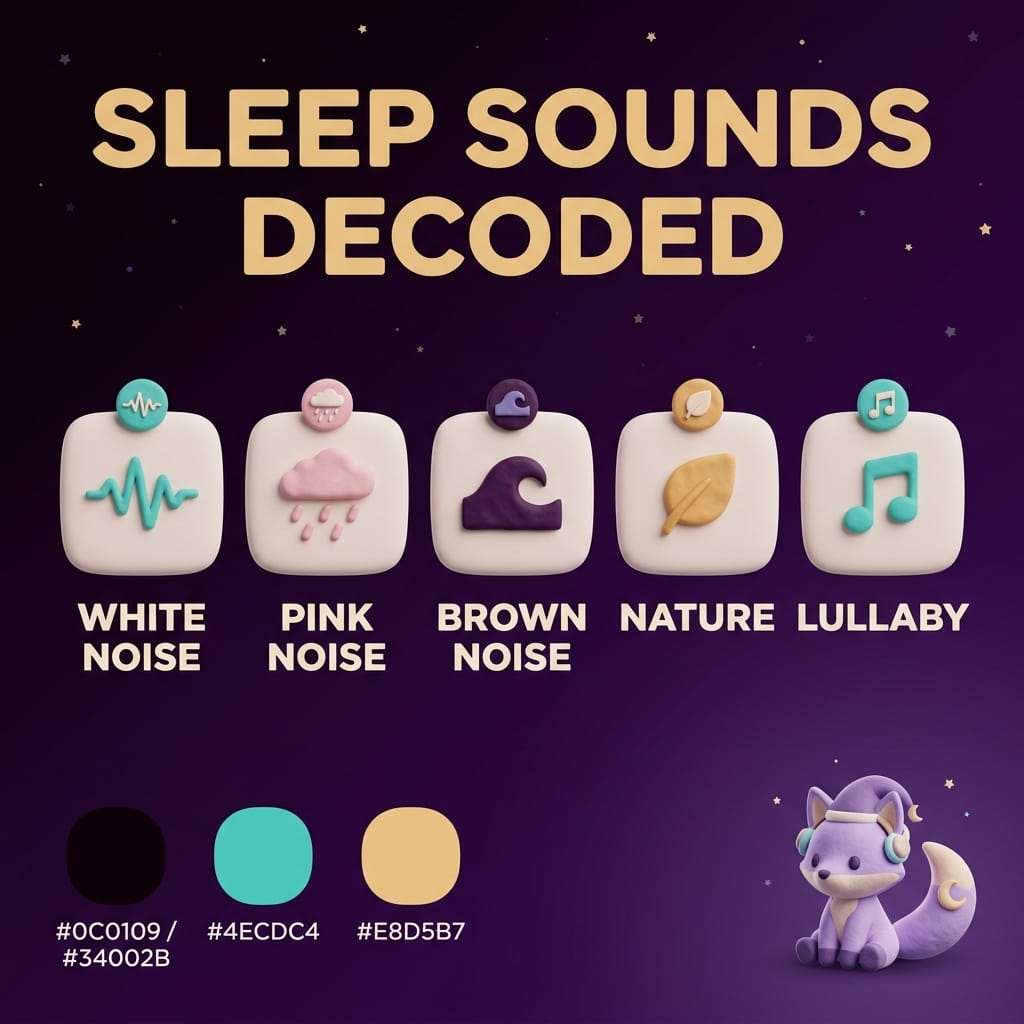
White noise contains every frequency at equal energy. It sounds like radio static or a hard fan. It is the most studied and the most effective masker — but to some children it sounds harsh, especially at higher volumes.
Pink noise has more energy in the low frequencies and less in the high. It sounds softer and rounder — closer to steady rain or a waterfall. Many children who fight white noise settle easily with pink. It masks disruptive noise nearly as well and is gentler on the ear.
Brown noise rolls off the high frequencies even more. It is the deepest of the three — like distant ocean surf or a low rumble. Good for children sensitive to anything sharp, and a favorite of older kids and parents alike.
Nature sounds (rain, ocean, stream) are pleasant and effective if the loop is long and seamless. Avoid tracks with birds, thunder, or sudden swells — anything that changes is something the brain can latch onto and wake to.
Lullabies and quiet stories are a falling-asleep aid, not an all-night masker. A calm voice or simple melody helps an active mind let go. This is why a gently narrated bedtime story works so well at the start of the night — and why it should fade once your child is drifting, not loop until morning.
The best sleep sounds by age
The right choice shifts as children grow.
Newborns (0–3 months). This is white and pink noise's strongest case. Newborns spent months inside a body that was loud — blood flow alone is roughly the volume of a vacuum cleaner. Steady low noise is familiar and deeply calming. Keep it gentle and continuous.
Babies (4–12 months). Through the 4-month and 8–10-month sleep regressions, masking matters most: lighter, more fragmented sleep means small noises wake them more easily. White, pink, or brown noise at a low, constant volume helps bridge sleep cycles.
Toddlers (1–3 years). Now sound also becomes a sleep cue. The same brown-noise or rain loop every night tells a busy toddler brain "this is sleep time." Pair it with a fixed routine. Many toddlers do best with pink or brown noise plus a short calm story at the start.
Preschoolers and school-age (3+). Imagination and nighttime fears arrive. A steady sound now does double duty — it masks the noises a child might otherwise interpret as "something in the room," which is genuinely reassuring for a child who is afraid of the dark. Brown noise and gentle rain tend to win at this age.
Want the falling-asleep half handled too? Dreamloo's calm, personalized audio bedtime stories are built for the wind-down — a soft, steady narrated voice that helps a child let go, then quiet. Pair a story at lights-out with low steady noise through the night, and you have covered both jobs sound can do.
How loud is safe? Read this section twice
This is the part most articles skip, and it is the part that matters most.
A 2014 study in Pediatrics tested 14 infant sound machines and found that at maximum volume, some produced over 85 decibels measured at a close distance — loud enough that prolonged exposure could, in principle, risk hearing damage (Hugh et al., 2014). For context, occupational safety limits (NIOSH) treat sustained exposure at 85 dBA as the point where hearing protection is recommended for adults. A baby's ears are more vulnerable, not less.
The takeaway is not "sound machines are dangerous." It is volume and distance, not duration, are what you control for. Practical, evidence-aligned rules:
- Keep it quiet. Aim for around 50 decibels or below — roughly the level of a quiet shower heard from another room, or a soft hum you can easily talk over. If you have to raise your voice to be heard above it at the crib, it is too loud.
- Keep it far. Place the machine at least 7 feet (about 2 meters) from where your child sleeps — across the room, not on the headboard or in the crib. Distance drops the volume sharply.
- Low all night is fine; loud all night is not. Continuous low-volume sound through the night is supported and safe. The risk is loudness, not the clock.
- Use the device's lower settings. Most machines are far louder at max than anyone needs. The right setting is usually near the bottom of the dial.
How to use sleep sounds well
Getting the type and volume right is most of the job. A few habits make the rest work.
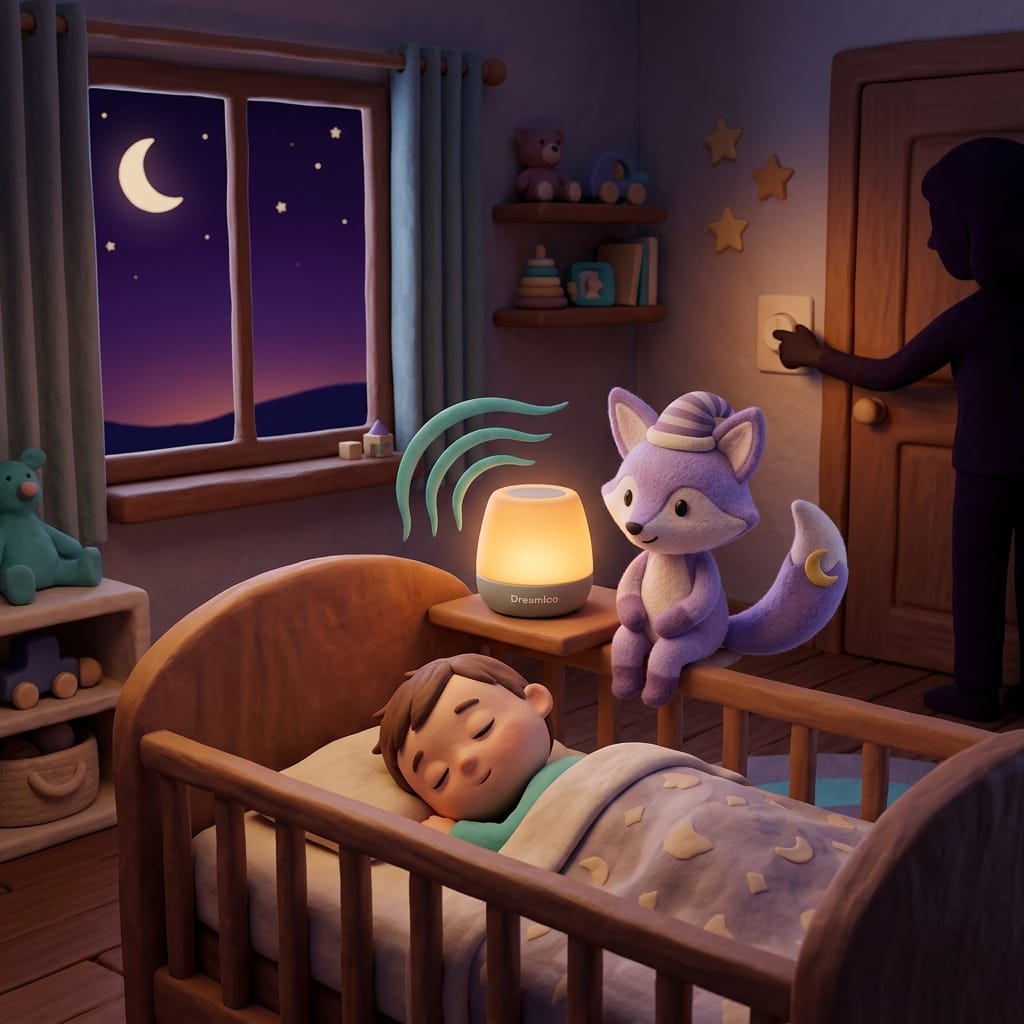
Placement. Across the room, pointed away from the child's head, on a stable surface. Never inside the crib or bed.
All night vs. timer. Both are valid. Continuous low noise also masks the 4–6 a.m. household stir and helps a child resettle between sleep cycles, which is why many specialists prefer it. A timer that covers the first 60–90 minutes handles the hardest part — initial sleep onset and the light early-night sleep — and is a fine choice if continuous sound is impractical. Pick one and keep it consistent.
Consistency beats novelty. The same sound, same volume, every night. Sleep cues work through repetition. Switching from rain to ocean to white noise night to night weakens the signal.
Travel with it. A portable sound machine or a downloaded loop on a phone is one of the most reliable tools for keeping sleep on track away from home, where the soundscape is unfamiliar and unpredictable.
Weaning, if you choose to. There is no medical need to remove sleep sounds, and no good evidence they cause harmful dependence — plenty of adults sleep with a fan for life. If you do want to wean, lower the volume gradually over one to two weeks rather than cutting it off. Most "my child can't sleep without it" problems are really "we changed it too suddenly" problems.
When sleep sounds won't fix it
Sound masks disruptive noise and cues sleep. It does not address an underlying cause, and reaching for a louder machine when something else is wrong wastes nights.
Look past sound and talk to your pediatrician if you see: loud snoring, gasping, or long pauses in breathing during sleep; sleep that stays badly broken for weeks despite a solid routine and good sleep environment; extreme daytime sleepiness or behavior changes; or frequent, distressing night wakings that look like night terrors rather than ordinary waking. These point to causes — from sleep-disordered breathing to a routine that needs rebuilding — that no amount of brown noise will solve.
For everything else — the door thud, the dishwasher, the early-rising sibling, the busy mind that won't switch off — steady sound at a safe, quiet volume is one of the simplest, best-evidenced tools a parent has.
Common Questions from Parents
Will my child become dependent on sleep sounds?
Not in any harmful way. Sleep researchers consistently find no evidence that a sound machine creates a damaging dependence — it becomes a sleep association, the same way a dark room or a favorite blanket does, and associations are useful. If portability ever becomes a concern, you can wean by lowering the volume gradually over a couple of weeks. Most children, though, simply keep using it for years with no downside, just as many adults sleep with a fan their whole lives.
Is it bad to play sound all night?
No, as long as it is quiet. The duration is not the risk factor — the volume is. Continuous low-volume noise through the night actually has an advantage: it keeps masking sound during the lightest, most wakeable sleep in the early morning hours, helping your child resettle instead of fully waking. A loud machine all night is the thing to avoid, not a quiet one.
Can I just use a fan instead of a sound machine?
Often, yes. A fan produces a reasonable approximation of pink or brown noise and is a perfectly good masker. The cautions are the same: keep it at a low, steady volume and place it away from the bed so it is not blowing directly on your child or running loud. The main thing a dedicated machine adds is a consistent, repeatable sound and controlled volume — but a quiet fan in the corner has settled countless children.
My child sleeps fine without sound — should I add it anyway?
If sleep is genuinely good, there is no need to add a sound machine just because other families use one. Sleep sounds are a tool for a problem: noisy environments, frequent small wakings, a hard-to-settle child, or travel. If none of that applies, leave it. Adding tools a child does not need only creates more variables to manage later.