

It is 2 a.m., and your baby is gnawing on their fist, drooling through their sleeve, and crying in a way that sounds different from a hunger cry. You check for a new tooth, find a swollen ridge along the gum, and brace for what feels like it could be weeks of broken nights. Teething and sleep get blamed together constantly, but the actual research paints a narrower picture than most parents expect. One study that tracked infants daily around each tooth's arrival found the real symptoms cluster in a window of just a few days, not a long stretch (Wake, Hesketh, & Lucas, 2000).
This guide walks through what teething really does to sleep, how to tell it apart from something else going on, and what to try tonight that has some evidence behind it, not just tradition.
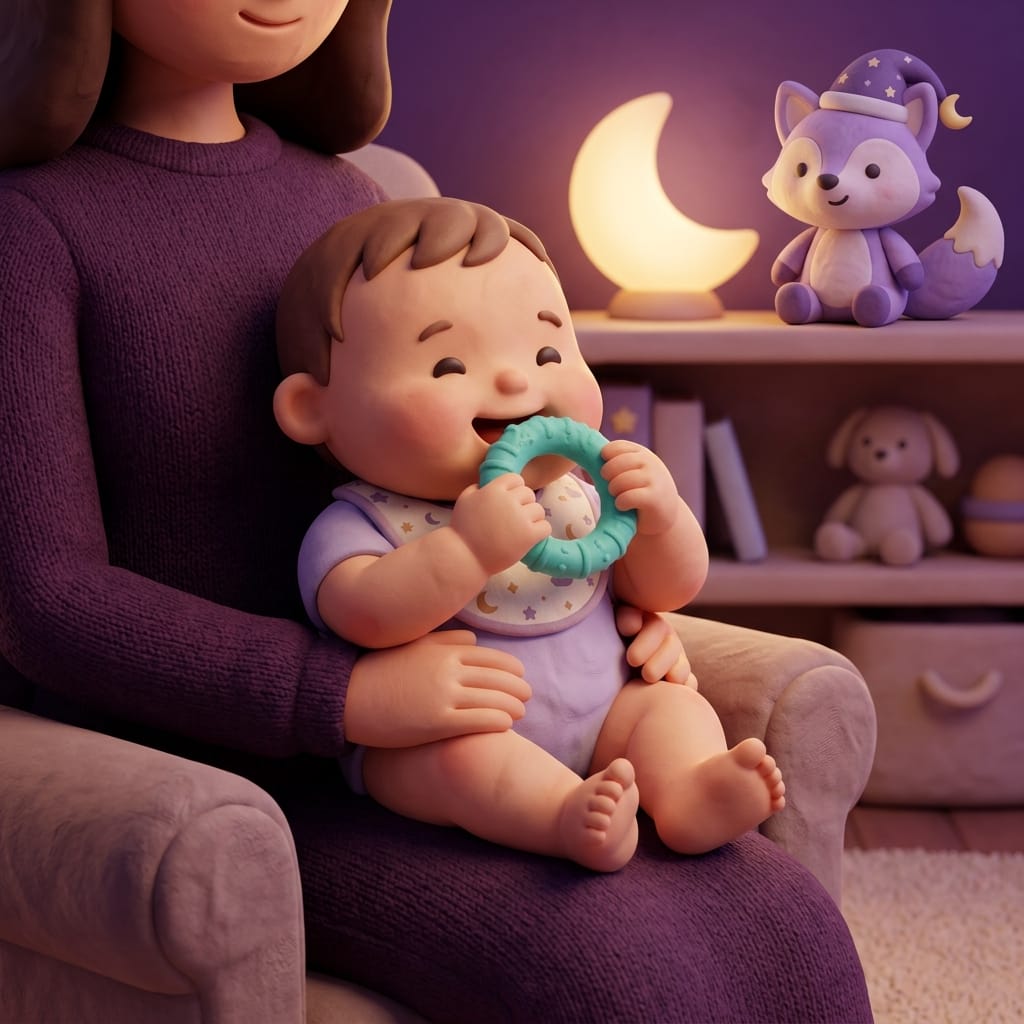
What the Research Actually Says About Teething and Sleep
Parents have blamed teething for fevers, diarrhea, rashes, and weeks of bad nights for generations. The research tells a more modest story. A cohort study that followed infants daily through more than 20 months of tooth eruptions found symptoms like drooling, gum-rubbing, chewing, and mild wakefulness rising in the day before a tooth appeared and settling within a day or two afterward (Wake, Hesketh, & Lucas, 2000). Fever above a low grade, diarrhea, and rash were not meaningfully linked to eruption days at all.
A separate prospective study of infants followed from birth reached a similar conclusion: certain mild symptoms, including irritability and disrupted sleep, showed up more often on the actual day a tooth broke the gum line, but the pattern was short and specific, not a general month-long fussy stretch (Macknin, Piedmonte, Jacobs, & Skibinski, 2000).
That matters for how you think about a rough patch. Teething and sleep problems are real, but genuine tooth-related sleep disruption tends to be brief. If nights have been hard for two or three weeks straight, a new tooth is probably not the only thing happening.
How Long Does a Teething-Related Sleep Disruption Really Last?
Most of the discomfort from a single tooth clusters tightly around the day it emerges. Based on the cohort data above, a reasonable expectation is:
- One to two days before eruption: Mild fussiness, drooling, and gum-rubbing may increase.
- The day of eruption: Symptoms tend to peak, including some wakefulness at night.
- One to two days after: Symptoms usually fade quickly once the tooth is visibly through.
Babies get their first tooth anywhere from about 4 to 12 months, and by their second birthday most have a full set of 20 primary teeth, which means several of these short bursts happen over roughly two years. It can genuinely feel constant even though any single tooth's disruption is short. If you are also navigating shifting nap needs during this stretch, our guide to the baby sleep schedule by age can help you separate what is developmental from what is one tooth passing through.
Signs It's Teething and Not Something Else
Because teething gets blamed for almost everything in the first two years, it helps to know what actually points to a tooth versus what points elsewhere.
Likely teething:
- Drooling more than usual, sometimes enough to need a bib change
- Chewing on fists, toys, or crib rails
- One cheek looking slightly flushed
- A swollen, tender ridge you can feel along the gum
- Mild, short-lived fussiness that eases once the tooth appears
Probably not teething, worth a call to your pediatrician:
- Fever over 100.4°F
- Diarrhea, vomiting, or a rash spreading beyond the cheeks
- A persistent cough or congestion
- Pulling at one ear, which can suggest an ear infection instead
- Sleep disruption lasting more than a week with no visible tooth progress
Ear infections in particular get mistaken for teething often, since both can cause night waking and general crankiness. If your baby is tugging at an ear along with the crying, it is worth a look from your pediatrician rather than assuming it will pass with the tooth.

What to Try Tonight: Comfort Measures That Actually Help
A few approaches have real support behind them, and a few popular ones do not.
- Chilled, not frozen, teething rings. Cold provides genuine numbing relief on sore gums. Keep rings in the refrigerator rather than the freezer, since a fully frozen ring can be too hard and even bruise tender gums.
- A clean, cold washcloth. Wet a washcloth, wring it out, and chill it briefly. It gives your baby something safe to gnaw on and doubles as a gentle way to wipe drool.
- Gentle finger massage. Rubbing the sore area with a clean finger for a minute or two can ease pressure, though it is a short-term fix your baby will likely want repeated.
- Pediatrician-approved pain relief for a genuinely rough night. Infant acetaminophen or ibuprofen, dosed by your child's weight and age per your pediatrician's guidance, is more effective for real discomfort than topical products.
- Skip benzocaine gels for babies under two. The FDA has warned against benzocaine-containing teething gels for young children due to a rare but serious risk, and most pediatric guidance now steers away from them entirely (U.S. Food and Drug Administration, 2018).
- Skip amber teething necklaces. There is no evidence they relieve pain, and they carry a real strangulation and choking risk, which several pediatric dental organizations warn against (American Academy of Pediatric Dentistry, 2021).
None of these will make a tooth appear faster. They take the edge off enough that your baby, and you, can get back to sleep sooner.
Sleep Habits That Are Easy to Slip Into During Teething and Hard to Break Later
The discomfort itself usually passes in a couple of days, but the sleep habits that form during a rough stretch can outlast it by months. This is the part of teething and sleep that catches a lot of parents off guard.
A few common patterns worth watching for:
- Feeding back to sleep every wake-up, even after the discomfort has clearly eased, because it worked once and became the default response
- Bringing your baby into your bed, which can be a reasonable short-term choice but is harder to reverse the longer it continues
- Extra-long rocking or holding to fall asleep, which shifts your baby away from settling independently
- A later bedtime to "make up for" a hard day, which often backfires into more overtiredness, not less
None of these are mistakes in the moment. Comforting a hurting baby at 2 a.m. is exactly the right instinct. The goal is simply to notice when the tooth has clearly come through and gently step back toward the routine you had before, rather than letting a two-day accommodation quietly become a two-month one. If you are still building that baseline routine, our step-by-step bedtime routine for toddlers guide works well as a template to return to once things settle.
Give the wind-down back its anchor. A calm, screen-free Dreamloo audio story can slot right back into the routine once a rough teething night has passed, helping signal that bedtime is back to normal.

When Teething Isn't the Real Culprit
It is worth naming this directly: teething is one of the most over-blamed causes of infant sleep trouble. Because babies are almost always cutting some tooth somewhere between four months and two and a half years, it becomes an easy explanation for whatever is happening at bedtime, even when the timing does not quite line up.
A few things that commonly overlap with teething and get mistaken for it:
- Developmental leaps, like learning to pull up, crawl, or babble new sounds, which can genuinely disrupt sleep on their own
- Nap transitions, especially the 2 to 1 nap transition, which often happens in the same general age window as several teeth coming in
- Separation anxiety, which tends to peak around 8 to 10 months and again closer to 18 months, right alongside a busy teething period
- A mild illness, like a cold, that arrived independently but gets attributed to the tooth instead
If a rough patch stretches well past the few-day window the research links to actual eruption, it is worth asking what else might be going on rather than waiting for a tooth that has already appeared to somehow explain another two weeks of bad nights.
Getting Back on Track Once the Tooth Is Through
Once you can see or feel the tooth has broken the surface and the fussiness has clearly eased, the fastest way back to normal sleep is returning to whatever worked before, deliberately and a little sooner than feels natural.
A few steps that help:
- Go back to the same bedtime you used before the rough patch, rather than easing into it gradually.
- Phase out any temporary habit you added, like extra feeds or co-sleeping, over a few nights rather than all at once, if it has only been going a short while.
- Keep daytime naps on their usual schedule, since a few overtired days do not need to reset the whole daily rhythm.
- Watch for the next tooth, since babies commonly cut several in clusters, and knowing another rough day or two might be coming can make it feel less alarming when it happens.
For younger babies still building their overall sleep foundation, our guide on how to get a newborn to sleep at night covers the basics that make bouncing back from any disruption, teething or otherwise, considerably easier.

Common Questions from Parents
My baby has been fussy for two weeks and I can't find a new tooth. Is it still teething?
Possibly, since some teeth take longer to work their way up and are harder to feel or see, especially molars. But two straight weeks is longer than the short window most research links to active eruption, so it is worth considering other explanations too, a developmental leap, a nap change, or a mild illness running alongside it. If nothing shifts within another few days, or if you notice fever, ear-tugging, or a rash, a check-in with your pediatrician is a reasonable next step.
Is it okay to give pain medication every night during a hard teething week?
Occasional use of an appropriately dosed infant pain reliever, following your pediatrician's weight-based guidance, is generally considered safe for the short, intense stretch around a tooth's arrival. It is not meant to be a nightly routine that continues for weeks. If you find yourself reaching for it most nights for an extended period, that is a good signal to check with your pediatrician about what else might be contributing to the discomfort.
My toddler chews on everything, not just teething toys, during a hard tooth. Is that normal?
Yes. Chewing pressure genuinely eases gum discomfort, so a teething toddler will happily gnaw on furniture, toy edges, or their own sleeve if a proper teether is not within reach. Keep a couple of clean, chilled teething rings in easy reach during the day and near the crib at night, so the urge to chew has a safe outlet close by when discomfort strikes.