

Your eight-month-old was sleeping fairly well. Maybe one wake-up a night, naps that mostly held together. Then, without warning, they're pulling themselves up to stand at the crib rail at 2 a.m., wide awake and upset, and won't lie back down no matter what you try. Nothing in your routine changed. This is the 8 month sleep regression, and it runs on a different engine than the one your baby went through around four months. This time, the disruption is driven by fast leaps in movement and thinking. Most eight-month-olds can sit without support, many are pulling up to stand or starting to crawl, and a lot are developing object permanence, the understanding that people and things still exist even when they're out of view (Centers for Disease Control and Prevention, 2022). That new understanding is exciting for daytime play and genuinely hard on sleep, because now, when you leave the room, your baby knows you're still out there and wants you back. Here's why this regression looks and feels different, how long it tends to last, and what actually helps tonight.
What's Actually Happening at 8 Months
The 4 month sleep regression is mostly about brain wiring: a baby's sleep cycles reorganize into the lighter and deeper stages adults use, and that shift alone disrupts sleep for a while. The 8 month sleep regression is different. By this age, sleep architecture has largely settled, so the culprit is usually a cluster of physical and cognitive milestones happening at once (Galland, Taylor, Elder, & Herbison, 2012).
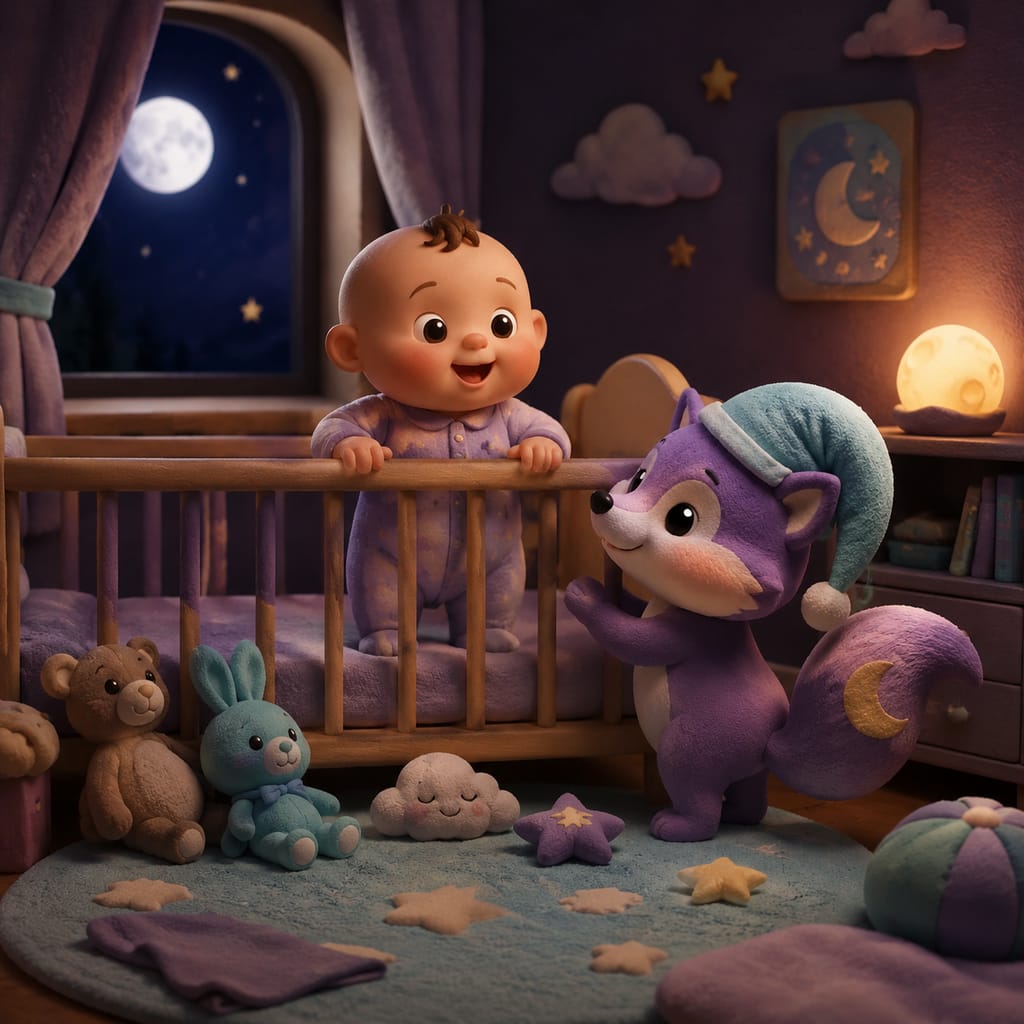
A baby who is learning to pull up to stand often does exactly that in the middle of the night, sometimes before they've figured out how to sit back down again. A baby who is close to crawling may be too keyed up, physically and mentally, to settle easily. And a baby who has just realized that mom or dad still exists somewhere else in the house, even with the door closed, may protest being left in a way they never did at five or six months.
None of this means something is wrong. It means your baby's brain and body are doing exactly what they're supposed to be doing at this age, just not on a schedule that's convenient for anyone's sleep. If you want a sense of what a typical day and night look like right now, our 8 month old sleep schedule guide breaks down naps and wake windows for this exact stage.
Signs This Is the 8 Month Sleep Regression
Not every hard night at eight months is the regression. Teething, a cold, or a simple off day can look similar. A few patterns point more specifically toward this developmental stretch:
- Sudden, frequent night waking after a period of decent sleep
- Standing up in the crib and being unable, or unwilling, to lie back down
- Crying hard when a parent leaves the room at bedtime or during a diaper change
- Shorter or skipped naps, even when your baby seems tired
- New clinginess during the day, not just at night
If your baby also has a fever, seems unusually lethargic, or has stopped eating normally, that points away from a typical regression and toward something worth a call to your pediatrician.
How Long Does the 8 Month Sleep Regression Last?
Most families see the hardest stretch ease within two to four weeks. That's often a bit shorter than the 4 month sleep regression, because this one tends to resolve once a specific skill feels mastered rather than waiting on a broader shift in how sleep itself is organized.
Once your baby can pull up and lie back down without help, or once crawling feels routine instead of new, a lot of the nighttime practicing tends to stop on its own. Separation anxiety usually softens on a slightly longer curve, easing gradually over the following months rather than disappearing all at once (Anders & Keener, 1985).
A single rough night a few weeks in doesn't mean the whole stretch is starting over. Progress here is rarely a straight line, and that's normal.
Separation Anxiety and Object Permanence: Why Nights Get Harder Now
This is the piece that makes the 8 month sleep regression feel so different from earlier ones. Object permanence, usually emerging somewhere between 8 and 12 months, means your baby now understands that you continue to exist even when you're not in the room (Centers for Disease Control and Prevention, 2022). Earlier in infancy, out of sight was genuinely out of mind. Not anymore.
That's a real cognitive win, and it's also why bedtime goodbyes can suddenly trigger tears that weren't there a month ago. Your baby isn't being manipulative or forgetting how to sleep. They're processing a big new idea: that the world, and you, keep existing somewhere they can't see.
A few things tend to help during this stretch:
- Keep goodbyes short and consistent. A brief, calm exit is easier for a baby to predict than a long, drawn-out one.
- Practice brief separations during the day. Stepping into another room for a minute while your baby plays, then returning, builds a small, low-stakes version of the same skill bedtime requires.
- Use a consistent sound cue. The same white noise or lullaby every night gives your baby something familiar to anchor to when you're not in the room.
Give your baby a calm, familiar voice to settle to. Our free audio bedtime stories offer a screen-free way to fill those last few minutes before sleep, which can feel steadying during a stretch when separation itself is the hard part.
Wake Windows and Schedule Adjustments That Help
At eight months, wake windows typically run somewhere between 2.5 and 3.5 hours, a bit longer than they were even a couple of months ago. If your baby's naps have gotten shorter or choppier because of this regression, the wake window right before the next sleep period may need to shrink, even if it feels early by the clock.
An overtired baby is a harder baby to settle at any age, and that's especially true during a stretch when separation anxiety and new physical skills are already working against sleep. Our 6 month old wake windows guide has a useful framework for reading tired cues if you're not sure where your baby's window currently sits.
A few practical adjustments for tonight:
- Watch tired cues over the clock. Rubbing eyes, going quiet, or sudden fussiness matter more than a rigid schedule right now.
- Protect the first nap. A well-rested morning nap tends to buy easier afternoon and bedtime settling.
- Move bedtime earlier if naps were rough. A slightly earlier bedtime is usually easier on everyone than pushing through an overtired evening.
Building Sleep Skills That Last
Because this regression is tied to real skills your baby is actively building, it's also a natural window to gently support a bit more independent settling, if that feels right for your family. That doesn't mean leaving your baby to cry alone. At this age, responsive, gradual approaches tend to fit best.
A few habits that help without asking too much of an eight-month-old:
- Give daytime practice time. Supervised floor time to practice pulling up, standing, and sitting back down reduces how much your baby needs to rehearse those moves at 2 a.m.
- Pause for a beat before rushing in. A brief cry or fuss after a wake-up sometimes resolves on its own within a minute or two.
- Keep the crib the same familiar space. Consistency in the sleep environment gives your baby one less new thing to process while their days are already full of new skills.
Consistent routines matter here more than almost any other tool available. A predictable string of steps before sleep has been linked to better sleep outcomes in young children across a range of studies, and it costs nothing to start tonight (Mindell & Williamson, 2018).
What Not to Worry About
A few common worries during this stretch don't hold up once you look at what's actually going on:
"I created this by responding too quickly to my baby's cries." Responding to your baby doesn't cause this regression, and it doesn't create bad habits at this age. The disruption is driven by development that's happening on its own timeline, regardless of how quickly you go in.
"If my baby can't self-soothe now, they never will." Eight months is still early. Settling skills develop gradually over many months, and a rough patch now says nothing about your baby's ability to build those skills later, on their own timeline.
"Other babies aren't going through this, so something's wrong with mine." Some babies pass through this stretch with barely a hiccup; others have a genuinely hard month. Both are within the normal range of infant sleep, which varies widely from baby to baby (Paruthi et al., 2016).
When to Call Your Pediatrician
Most of what happens during the 8 month sleep regression is exhausting but medically unremarkable. A few signs are worth a call rather than waiting it out:
- Fever, unusual lethargy, or a baby who seems genuinely unwell rather than just fussy
- No weight gain, or a noticeable drop in appetite over more than a day or two
- Sleep disruption that hasn't eased at all after four to six weeks
- Any gut feeling that something feels off beyond the usual fussiness
Your pediatrician has seen this stretch many times over and can help you sort out whether you're looking at a typical developmental regression or something else worth a closer look.
Common Questions from Parents
My baby was sleeping through the night before this. Will we ever get back to that?
Almost always, yes. Because this regression is tied to specific skills rather than a permanent shift in how sleep works, most babies return to their previous sleep pattern, or an even better one, once the new skill feels routine instead of exciting. It can help to remember that your baby isn't losing ground. They're temporarily distracted by something new.
Should I stop my baby from practicing standing in the crib?
You don't need to stop it, but you can redirect it. Give plenty of standing and pulling-up practice during awake, supervised time, so the crib feels more like a place for sleep than a place for skill practice. If your baby stands up at night, a brief, calm help back down, without turning on lights or engaging much, usually works better than a long conversation.
Is this the same as the 4 month sleep regression, just later?
Not quite. The 4 month sleep regression is mostly about a shift in sleep architecture itself, the actual stages and cycles a baby sleeps in. The 8 month sleep regression is driven more by movement milestones and separation anxiety. They can feel similar from the outside, frequent waking, hard naps, but the underlying cause, and often the timeline, is different.